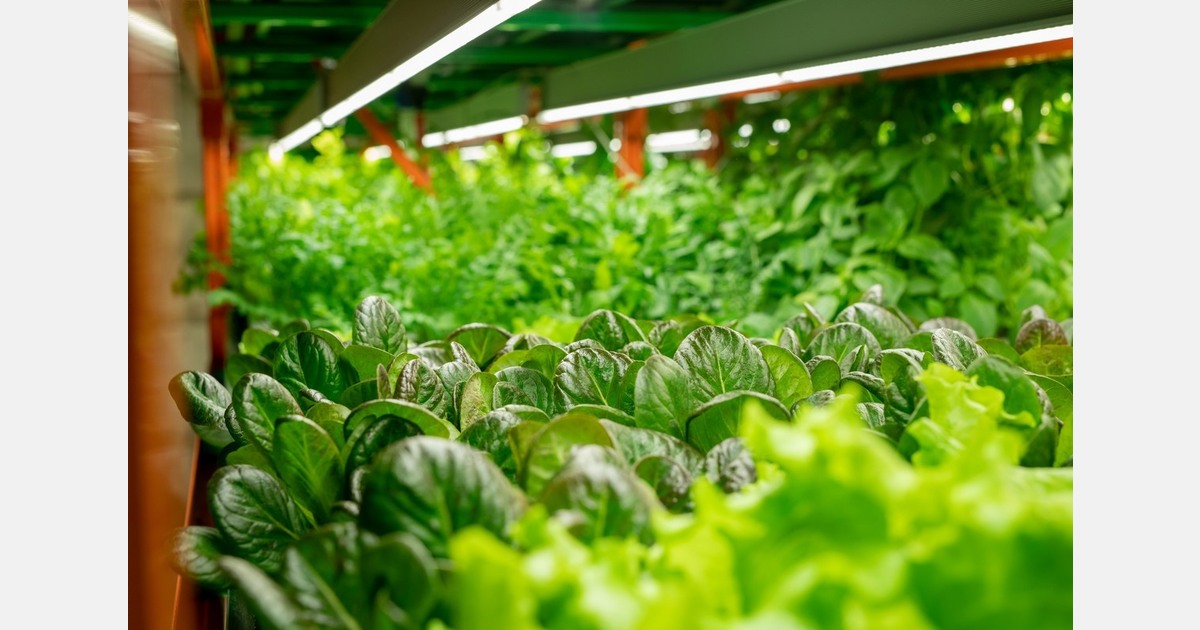
Balancing tech and automation in controlled environment agriculture

Source: VFD.com
Balancing tech and automation in controlled environment agriculture Thanks! Balancing tech and automation in controlled environment agriculture Automation, robots, large language models (LLMs), sensor networks, IoT and AI dominate conversations today.
Clayton Christensen painstakingly documented how one technology displaces another in his influential book, "The Innovator's Dilemma" (1997). The concept of appropriate technology originated in Gandhi's India in the 1930s.
Schumacher's "Small Is Beautiful" (1973), in which he argues for technology that is appropriately scaled for human systems. Put another way, indoor agriculture should not be defined by how much technology it uses, but by how it leverages appropriate technology to efficiently convert capital and energy into consistent, profitable yield.
Why this matters: For operators, this is a water-management story. The useful signal is that direct substrate measurements can help cut drain loss materially without giving up yield or fruit quality, which is exactly the kind of controllable efficiency gain a facility can build on.
Frequently Asked Questions
Why does substrate sensing matter in free-drain strawberry systems?
Because drain percentage tells a grower what already happened, while substrate moisture and EC data show root-zone conditions directly. That makes it easier to cut water loss without guessing.
What is the operator takeaway from this trial?
If the thresholds are understood well enough, growers can reduce drain water materially while protecting yield and fruit quality, which makes sensing an operational tool instead of a reporting tool.