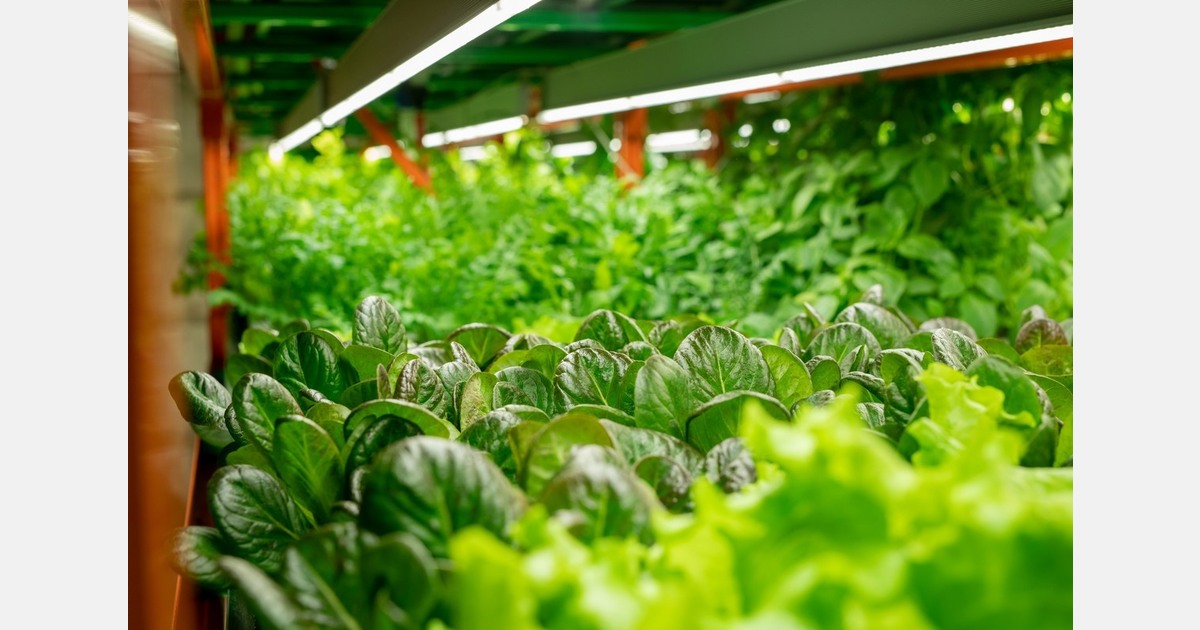
Creating modular architecture for vertical farm modeling

Source: VFD.com
Creating modular architecture for vertical farm modeling Vertical farming enables crop production in urban environments, independent of weather and seasonal conditions. This work develops a system architecture for simulating energy and resource flows in vertical farms through systematic functional decomposition grounded in system dynamics principles.
Second, functional decomposition derives subsystem boundaries comprising invariant functional units with defined output interfaces. Extension procedures accommodate additional state variables, expanded system boundaries, and previously neglected phenomena.
The architecture is validated against a systematically reviewed corpus of 21 vertical farm models. A Modular Architecture for Vertical Farm Modeling: System Analysis and Framework Design.
Why this matters: For operators, this is a water-management story. The useful signal is that direct substrate measurements can help cut drain loss materially without giving up yield or fruit quality, which is exactly the kind of controllable efficiency gain a facility can build on.
Frequently Asked Questions
Why does substrate sensing matter in free-drain strawberry systems?
Because drain percentage tells a grower what already happened, while substrate moisture and EC data show root-zone conditions directly. That makes it easier to cut water loss without guessing.
What is the operator takeaway from this trial?
If the thresholds are understood well enough, growers can reduce drain water materially while protecting yield and fruit quality, which makes sensing an operational tool instead of a reporting tool.