
"Food security today is about building a resilient, sustainable, and future-ready UAE food ecosystem"
Source: VFD.com
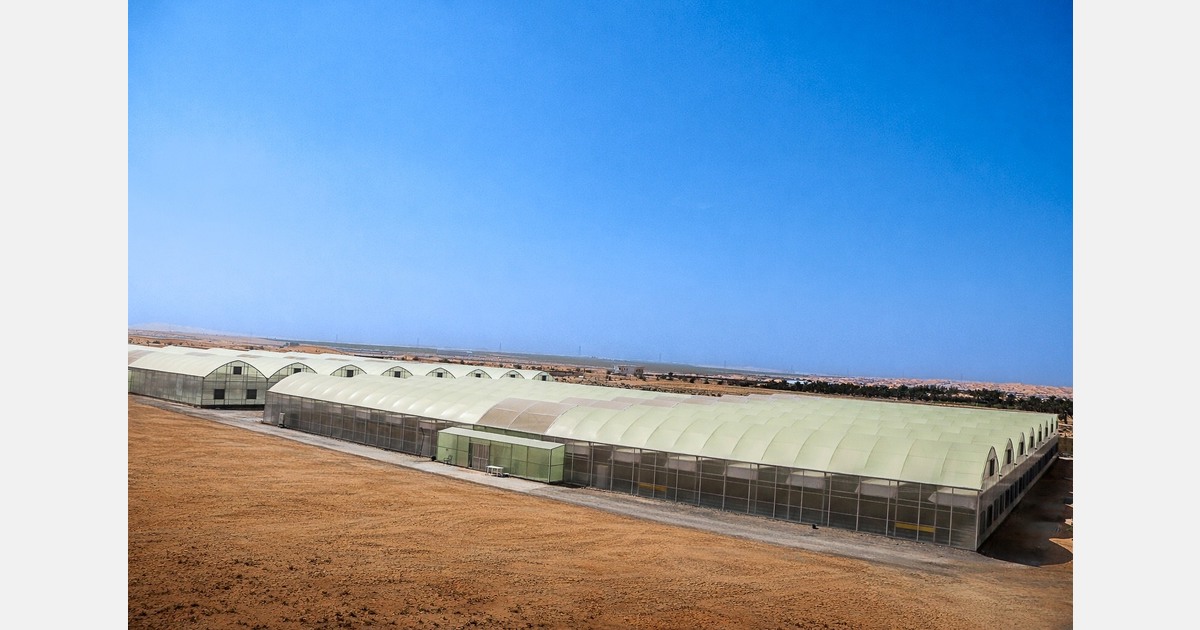
UNS Vertical Farms opens 10,000-square-metre tomato facility in Al Ain "Food security today is about building a resilient, sustainable, and future-ready UAE food ecosystem" UNS Vertical Farms, a commercial vertical farming operation founded in 2018 as a division of the Speedex Group, is scaling its operations into tomato production with a new greenhouse in Al Ain. The new farm will produce approximately 150,000 kilograms of fresh tomatoes annually, targeting domestic retail and HoReCa channels, adding to its existing Dubai facility's commercial production of up to 1,500 kilograms of microgreens and leafy greens per day across nearly 8,000 square metres.
A streamlined supply chain ensures delivery within 24 to 48 hours of harvest to retail and HoReCa partners, with a direct-to-consumer channel also available through the company's website. "With the launch of our facility, we aim to achieve strong market penetration through next-day delivery across both retail and HoReCa channels." © UNS Vertical Farms © UNS Vertical Farms National food security alignment The expansion aligns with the UAE's National Food Security Strategy 2051 and Net Zero 2050 goals, reducing dependence on imports while strengthening local supply chains.
Why this matters: This matters when it gives operators a clearer way to manage water, nutrients, and root-zone risk. That kind of control usually improves both resource efficiency and crop consistency.
Frequently Asked Questions
Why do retrofit and environmental-control choices matter so much?
Because these decisions affect every crop cycle that follows. A better control strategy can improve consistency and efficiency, while a poor one can lock in operating drag.
What should operators focus on when reading design or retrofit stories?
They should focus on what changed operationally: better climate stability, lower energy use, improved crop balance, easier labor, or cleaner control over inputs.


