
Heliospectra validates multi-channel LED control at Tomatoworld with 108 fixtures across 26 control groups
efficiency-optimized B5, G5, R90 common in commercial tomato production. This choice was deliberate: the installation supports camera-based monitoring systems, robotics, and advanced sensors that require consistent light quality for accurate data...
Source: HortiDaily
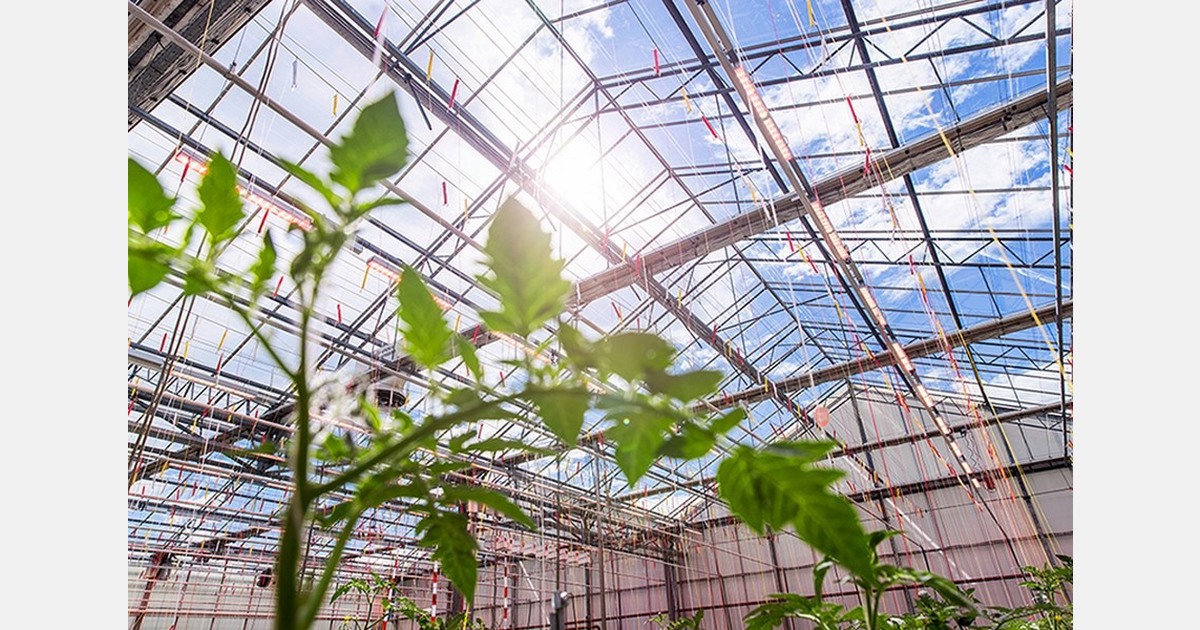
helioSENSE to launch at GreenTech 2026 Housing the latest technologies for Westland’s greenhouses Heliospectra has long worked with research institutions and controlled growing environments, where precise spectrum control and system reliability are essential. Supporting advanced monitoring and research activities Tomatoworld's greenhouse hosts a wide range of technologies, including camera-based monitoring systems, robotics, and advanced sensors.
© Heliospectra Testing lighting control under real greenhouse conditions The lighting installation at Tomatoworld consists of 108 fixtures. Developing plant-responsive lighting with helioSENSE Tomatoworld also provides an important environment for testing Heliospectra's new biofeedback sensor, helioSENSE, which will be launched at GreenTech 2026.
Why this matters: This matters when it gives operators a clearer way to manage water, nutrients, and root-zone risk. That kind of control usually improves both resource efficiency and crop consistency.
Frequently Asked Questions
What should growers evaluate before changing a lighting strategy?
They should look at crop type, canopy structure, current light distribution, energy cost, expected yield gain, and whether the new strategy improves whole-canopy efficiency.
Why is light distribution often as important as light quantity?
Because adding more photons to already saturated leaves does less work than improving how light reaches the parts of the canopy that are still underperforming.
{"@context": "https://schema.org", "@type": "FAQPage", "mainEntity": [{"@type": "Question", "name": "What should growers evaluate before changing a lighting strategy?", "acceptedAnswer": {"@type": "Answer", "text": "They should look at crop type, canopy structure, current light distribution, energy cost, expected yield gain, and whether the new strategy improves whole-canopy efficiency."}}, {"@type": "Question", "name": "Why is light distribution often as important as light quantity?", "acceptedAnswer": {"@type": "Answer", "text": "Because adding more photons to already saturated leaves does less work than improving how light reaches the parts of the canopy that are still underperforming."}}]}


