Improving lettuce yield in NFT systems

Source: VFD.com
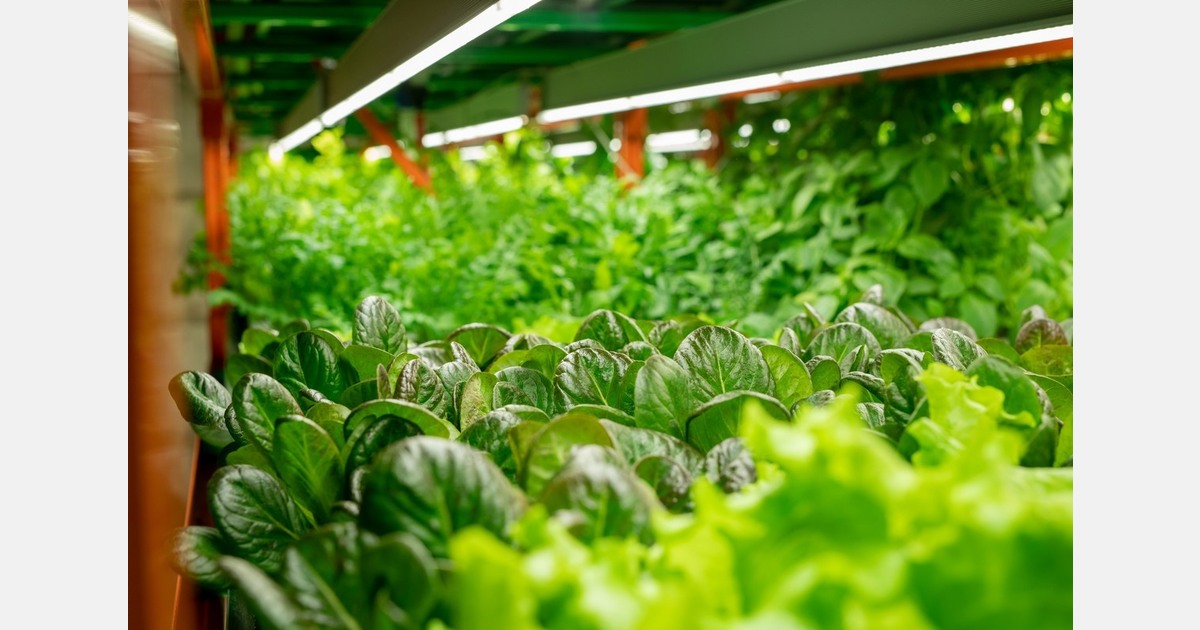
The purpose of this study was to evaluate how different foliar fertilizer concentrations affected the growth and yield of curly lettuce produced in an NFT hydroponic system. The experiment used a Completely Randomized Design (CRD) with eight different dosages of commercial foliar fertilizer (Gandasil D®: 0, 0.5, 1, 1.5, 2, 2.5, 3, and 3.5 g L⁻¹).
Foliar fertilizer significantly increased plant height, number of leaves, leaf area, root volume, and plant fresh weight (p < 0.05), but had no significant effect on chlorophyll content. Plants performed best at 3.5 g L⁻¹, with a 105% increase in fresh weight compared to the control group.
To boost lettuce growth and productivity in NFT hydroponic systems, apply 3.5 g of foliar fertilizer per L. Improvement of Lettuce Growth and Yield by Foliar Fertilizer in Nutrient Film Technique Hydroponics.
Why this matters: For operators, this is a water-management story. The useful signal is that direct substrate measurements can help cut drain loss materially without giving up yield or fruit quality, which is exactly the kind of controllable efficiency gain a facility can build on.
Frequently Asked Questions
Why does substrate sensing matter in free-drain strawberry systems?
Because drain percentage tells a grower what already happened, while substrate moisture and EC data show root-zone conditions directly. That makes it easier to cut water loss without guessing.
What is the operator takeaway from this trial?
If the thresholds are understood well enough, growers can reduce drain water materially while protecting yield and fruit quality, which makes sensing an operational tool instead of a reporting tool.