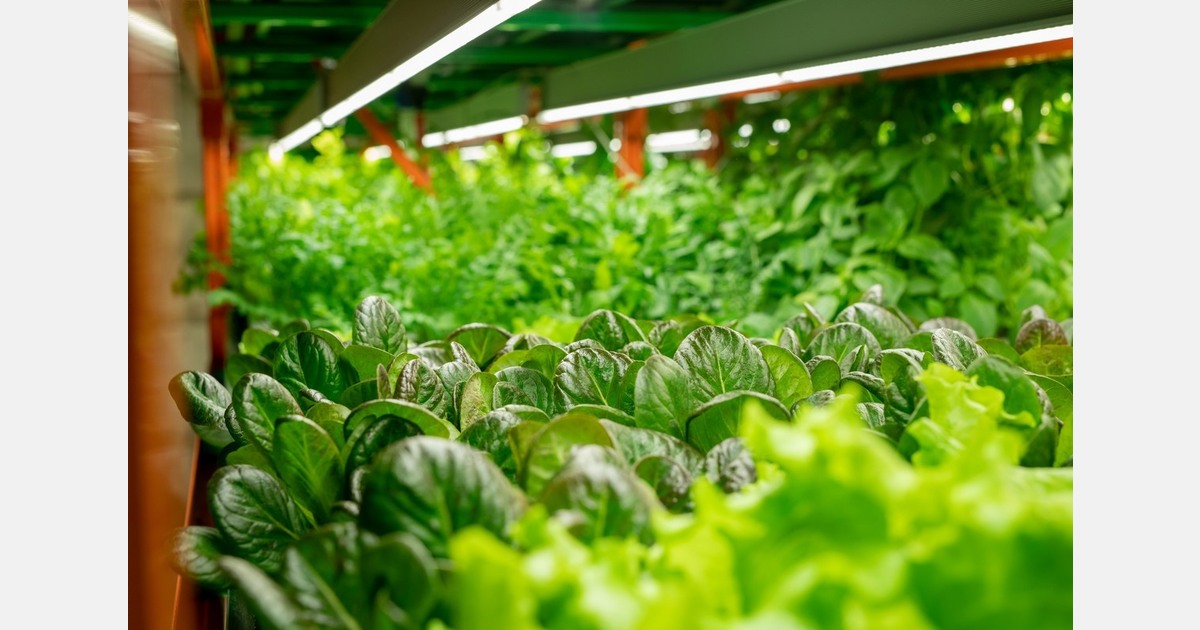
Looking at the trade-offs between hydroponic growing and conventional growing

Source: VFD.com
Looking at the trade-offs between hydroponic growing and conventional growing Controlled Environment Agriculture, specifically high-density vertical farming, offers unprecedented spatial yields but often suffers from a "yield-quality trade-off," in which accelerated biomass accumulation dilutes secondary metabolites. The experiment was conducted in Switzerland characterized by a continental climate with Mediterranean influences, to compare successive harvests across two setups: an indoor, high-density hydroponic VF system (fully controlled microclimate) and a conventional soil-based greenhouse.
Ecophysiologically, hydroponic plants adopted a conservative water-use strategy, halving stomatal conductance and apparent transpiration while maintaining photochemical efficiency. Trade-offs between yield, physiological performance, and quality in basil (Ocimum basilicum) cultivated in hydroponic versus conventional soil-based greenhouse system.
Source: ResearchGate Frontpage photo: © Itsanan Sampuntarat | Dreamstime Publication date: Fri 21 Aug 2026 Related Articles → See More Enhancing Spaceflight imaging data using Simple Online Automated Plant Phenomics Saint Maarten: Despite hydroponic training in 9 schools, initiative still not part of curriculum Looking at the trade-offs between hydroponic growing and conventional growing Vertical farming as a climate-smart solution for urban food security "The plant has never been the center of attention when designing a growth system" Examining the need for urban and peri-urban intensive farming systems in India US (GA): Hydroponic tower brings fresh greens and grower education to students Soilless farming system design impacts the diversity and composition of microbiota Design and experimental evaluation of an orderly harvesting device for hydroponic leafy vegetables U.S. researchers study food safety risks in hydroponic lettuce Related Articles Enhancing Spaceflight imaging data using Simple Online Automated Plant Phenomics Saint Maarten: Despite hydroponic training in 9 schools, initiative still not part of curriculum Looking at the trade-offs between hydroponic growing and conventional growing Vertical farming as a climate-smart solution for urban food security "The plant has never been the center of attention when designing a growth system" Related Articles Examining the need for urban and peri-urban intensive farming systems in India US (GA): Hydroponic tower brings fresh greens and grower education to students Soilless farming system design impacts the diversity and composition of microbiota Design and experimental evaluation of an orderly harvesting device for hydroponic leafy vegetables U.S.
Why this matters: For operators, this is a water-management story. The useful signal is that direct substrate measurements can help cut drain loss materially without giving up yield or fruit quality, which is exactly the kind of controllable efficiency gain a facility can build on.
Frequently Asked Questions
Why does substrate sensing matter in free-drain strawberry systems?
Because drain percentage tells a grower what already happened, while substrate moisture and EC data show root-zone conditions directly. That makes it easier to cut water loss without guessing.
What is the operator takeaway from this trial?
If the thresholds are understood well enough, growers can reduce drain water materially while protecting yield and fruit quality, which makes sensing an operational tool instead of a reporting tool.