
Low-cost sensor system detects plant salt stress before visible damage occurs
A team led by Penn State researchers has built a low-cost sensor system that detects salt stress in plants by measuring volatile organic compounds (VOCs) they emit, achieving up to 99.
Source: HortiDaily
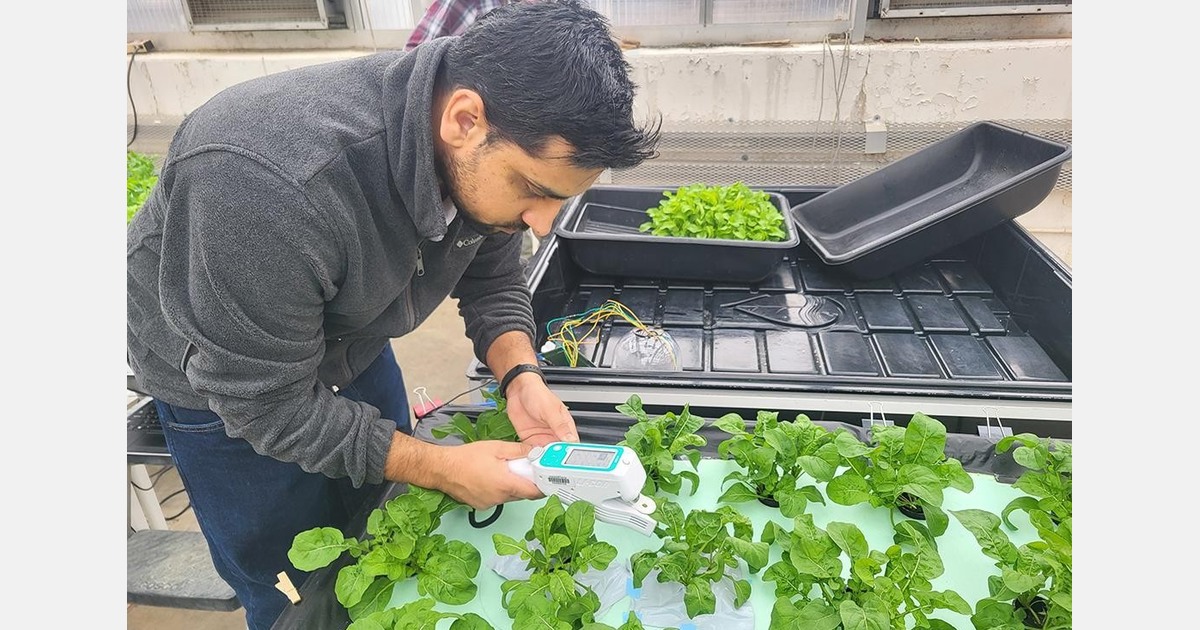
The researchers found that the sensor network achieved up to 99.15% accuracy in identifying plant stress levels The sensor works by detecting specific gases, called volatile organic compounds, emitted by plants. "We studied metal-oxide semiconductor sensors because they are small and easy to deploy, widely available online and very cheap — some under $1," Ahmad said, explaining the sensors detect even miniscule gas changes because they initiate different electrical signals in the semiconductor layer of the sensor.
To confirm the sensor system's accuracy, the researchers measured the plants' physical traits, such as growth, leaf condition and physiological responses, determining that the sensor network achieved up to 99.15% accuracy in identifying plant stress levels. © Penn State University The researchers used a hydroponic system for the experiment to be able to control the level of salinity and exclude other factors, to be sure that what we were detecting on the plants' volatile profile was determined by the difference in salinity levels That study by Di Gioia, Ahmad and colleagues suggests the same inexpensive gas sensors used in the more recent salt stress study could detect volatile organic compounds given off by healthy, sick and stressed plants dealing with drought, disease and pests.
Why this matters: This matters when it gives operators a clearer way to manage water, nutrients, and root-zone risk. That kind of control usually improves both resource efficiency and crop consistency.
Frequently Asked Questions
What should growers evaluate before changing a lighting strategy?
They should look at crop type, canopy structure, current light distribution, energy cost, expected yield gain, and whether the new strategy improves whole-canopy efficiency.
Why is light distribution often as important as light quantity?
Because adding more photons to already saturated leaves does less work than improving how light reaches the parts of the canopy that are still underperforming.
{"@context": "https://schema.org", "@type": "FAQPage", "mainEntity": [{"@type": "Question", "name": "What should growers evaluate before changing a lighting strategy?", "acceptedAnswer": {"@type": "Answer", "text": "They should look at crop type, canopy structure, current light distribution, energy cost, expected yield gain, and whether the new strategy improves whole-canopy efficiency."}}, {"@type": "Question", "name": "Why is light distribution often as important as light quantity?", "acceptedAnswer": {"@type": "Answer", "text": "Because adding more photons to already saturated leaves does less work than improving how light reaches the parts of the canopy that are still underperforming."}}]}


