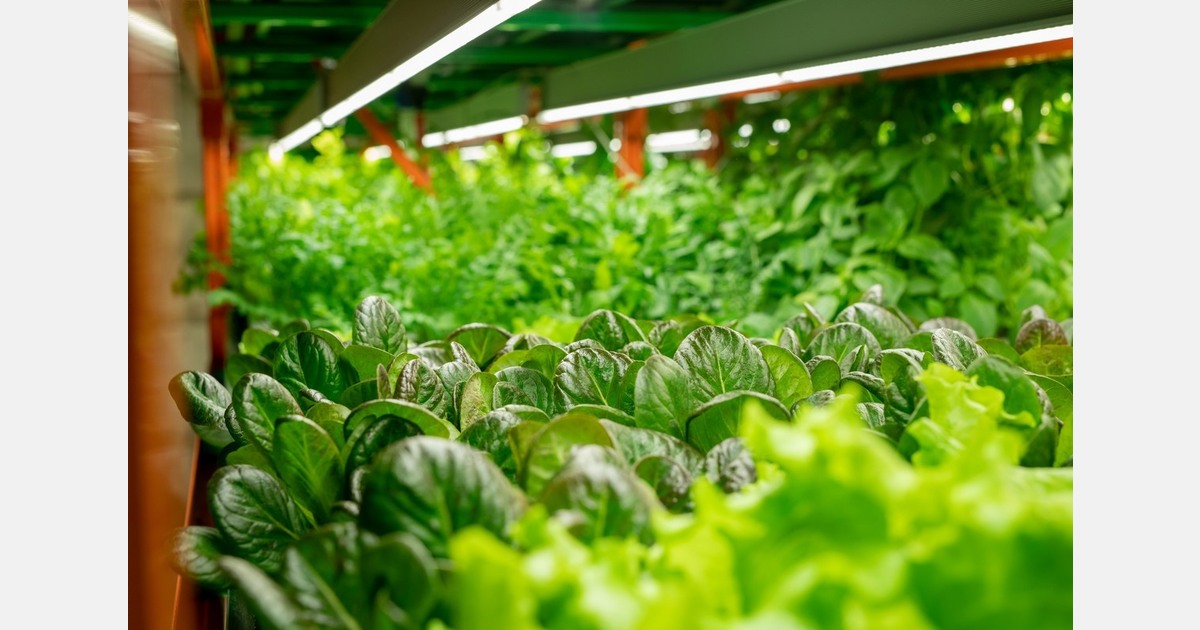
Mexico to host first International Symposium on Vertical Cropping Systems and Nutritional Quality

Source: HD.com
Against this backdrop, controlled-environment agriculture, vertical farming, precision fertigation, and new fertilization technologies represent strategic research areas for developing more sustainable agri-food systems. With this international perspective in mind, the Universidad Autónoma de San Luis Potosí (UASLP), Mexico, will host the 1st International Symposium on Vertical Cropping Systems, Nanofertilizers, and Nutritional Quality of Vegetables from September 24 to 26, 2026.
The scientific program will cover topics including vertical farming, controlled-environment horticulture, hydroponics, precision fertigation, plant nutrition, LED lighting, nanofertilizers, biofortification, and the nutraceutical quality of vegetables. Miguel Guzmán Palomino, from the University of Almería, Spain, presenting "Precision Fertigation and Optimization of Water and Nutrients in Sustainable Horticultural Systems," in which he will address strategies for improving water and nutrient management efficiency in horticultural production systems.
In addition to the lectures, the program includes specialized workshops, discussion panels, scientific poster presentations, and networking sessions, all designed to encourage dialogue among established researchers, early-career scientists, students, growers, companies, and institutions. 2026 Seed Your Future doubles Career Day program at Cultivate’26 Registration open for JPFA International Symposium on Plant Factory Indoor Ag-Con opens call for speakers for 2027 edition South Korea prepares for 2027 world strawberry expo Registration opens for 2026 Quebec Grower Summit Related Articles Mexico to host first International Symposium on Vertical Cropping Systems and Nutritional Quality Hong Kong fresh produce trade show expands buyer and technology programs Mexico will host a new international conference on blueberry cultivation Open Farm Days opens a window into Saskatchewan growing Program announced for Propagate!
Why this matters: For operators, this is a water-management story. The useful signal is that direct substrate measurements can help cut drain loss materially without giving up yield or fruit quality, which is exactly the kind of controllable efficiency gain a facility can build on.
Frequently Asked Questions
Why does substrate sensing matter in free-drain strawberry systems?
Because drain percentage tells a grower what already happened, while substrate moisture and EC data show root-zone conditions directly. That makes it easier to cut water loss without guessing.
What is the operator takeaway from this trial?
If the thresholds are understood well enough, growers can reduce drain water materially while protecting yield and fruit quality, which makes sensing an operational tool instead of a reporting tool.