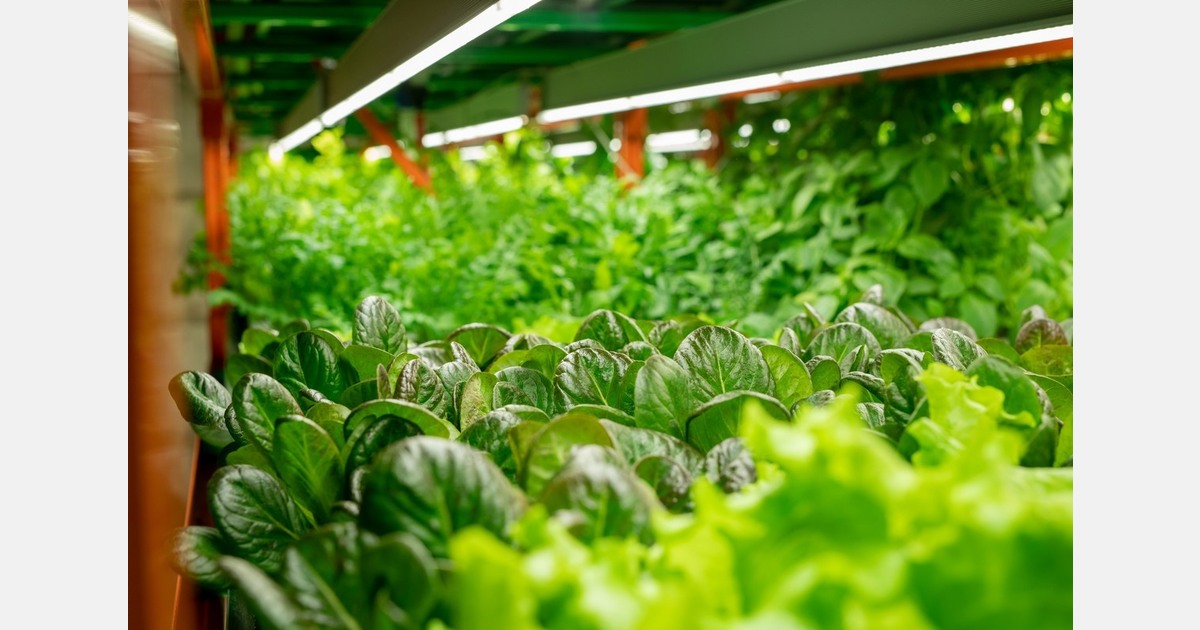
Research project explores harvesting water from air for sustainable agriculture in Oman

Source: VFD.com
Research project explores harvesting water from air for sustainable agriculture in Oman Thanks! Funded by the Strategic Research Program of the Research and Innovation Authority in collaboration with the Ministry of Agriculture, Fisheries and Water Resources, the project, titled "Feasibility Study to Extract Water from Air and Utilize it in Salt-Affected Lands," was led by Dr.
Ahmed Al Busaidi, a researcher at the College of Agricultural and Marine Sciences at Sultan Qaboos University. Al Busaidi examined the feasibility of integrating atmospheric water harvesting (AWH) technology with hydroponic farming and solar energy as a potential approach to agricultural production in areas affected by soil salinity and water scarcity.
As part of the research, he and his team assessed different locations across Oman to determine where atmospheric water harvesting could be most effective. The study identified several areas with favorable conditions, including parts of southern Oman near the borders with Yemen and Saudi Arabia, the northern coastline, and selected locations in the central regions.
Why this matters: For operators, this is a water-management story. The useful signal is that direct substrate measurements can help cut drain loss materially without giving up yield or fruit quality, which is exactly the kind of controllable efficiency gain a facility can build on.
Frequently Asked Questions
Why does substrate sensing matter in free-drain strawberry systems?
Because drain percentage tells a grower what already happened, while substrate moisture and EC data show root-zone conditions directly. That makes it easier to cut water loss without guessing.
What is the operator takeaway from this trial?
If the thresholds are understood well enough, growers can reduce drain water materially while protecting yield and fruit quality, which makes sensing an operational tool instead of a reporting tool.