
Retrofitting the greenhouse: how Spanish growers are adding digital intelligence to aging infrastructure
Source: HD.com
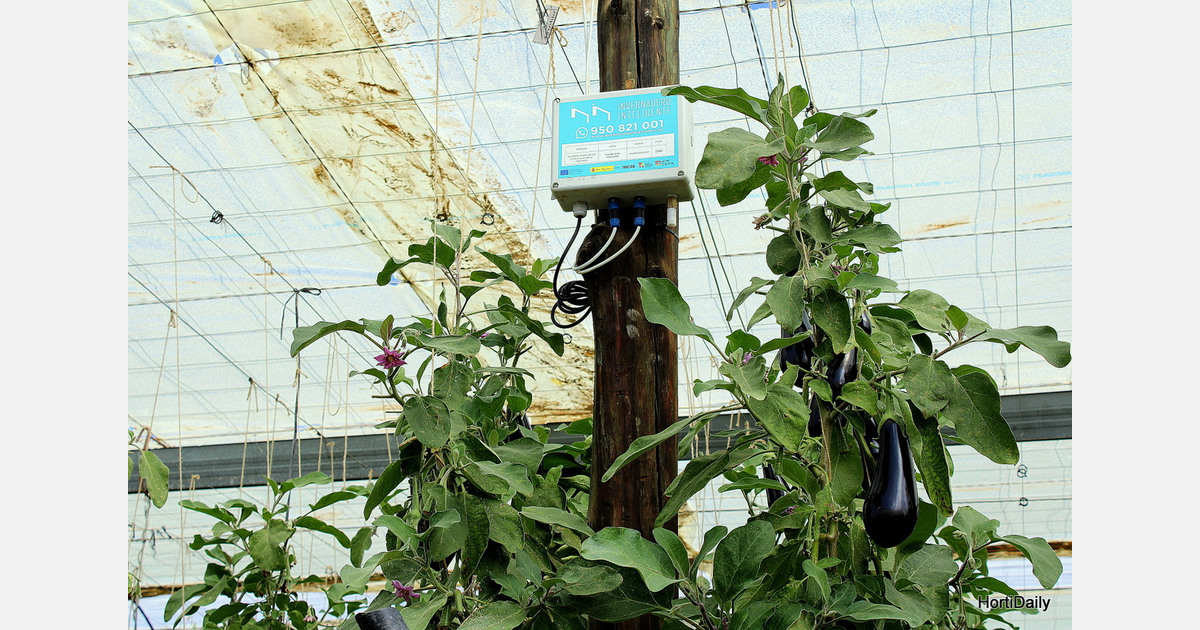
In practice, this means incorporating a control unit capable of collecting data continuously, every few minutes, and acting on parameters previously defined by the farmer himself, integrating both control of the greenhouse's moving elements and monitoring of environmental conditions and crop status." Francisco Gutiérrez, CEO of Invernadero Inteligente "Sensorization is one of the key elements of this model, with devices that measure temperature and humidity, both in the environment and above the roof, as well as PAR radiation, that is, the fraction of light useful for photosynthesis, a fundamental data point for understanding how the plant responds to its environmental conditions." "One of the most relevant aspects of Invernadero Inteligente is, in fact, the incorporation of substrate control within the same system, something that is not usually present in traditional climate controllers, which focus exclusively on environmental variables. To do this, we use tensiometers, a type of sensor with a long track record in agriculture that directly measures the water demand of the soil and provides a clear signal independent of substrate type, avoiding the limitations of other systems that are more sensitive to factors such as compaction or soil composition." "This integration allows irrigation to be managed with greater precision, reducing both water consumption and energy costs and fertilizer use, something very important at a time when cost efficiency is increasingly critical," he explains while showing the tensiometers on a watermelon crop in the Vícar area.
"In practice, this heterogeneity is reflected in the coexistence of operations with different levels of technology adoption, where digitalization can take very different forms, whether complete climate control and automation systems or simpler solutions oriented toward monitoring key parameters such as soil humidity or environmental conditions." "In the case of small producers, the availability of public funding, such as European resilience funds, has in some cases allowed the complete financing of equipment installation, facilitating access to technologies that would otherwise be more difficult to implement." Economic efficiency and sustainability The impact of these solutions translates into a direct improvement in productive and economic efficiency, allowing more precise adjustment of resource use in a context where every cost carries significant weight in the final profitability of the operation. "Irrigation control, for example, affects not only water consumption but also the associated energy costs and the use of inputs such as fertilizers, with both economic and environmental implications.
Why this matters: This matters when it gives operators a clearer way to manage water, nutrients, and root-zone risk. That kind of control usually improves both resource efficiency and crop consistency.
Frequently Asked Questions
What should growers evaluate before changing a lighting strategy?
They should look at crop type, canopy structure, current light distribution, energy cost, expected yield gain, and whether the new strategy improves whole-canopy efficiency.
Why is light distribution often as important as light quantity?
Because adding more photons to already saturated leaves does less work than improving how light reaches the parts of the canopy that are still underperforming.


