
South Korea: How lighting changes growth in strawberry plants
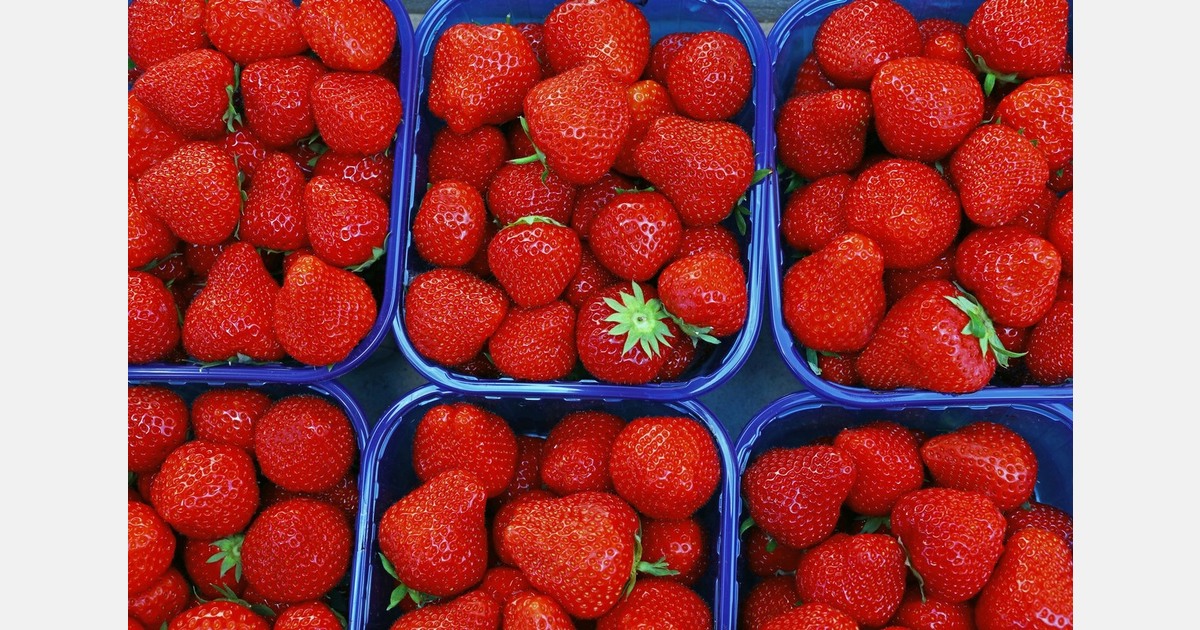
Source: VFD.com
This study evaluated the daily light integral (DLI; 15, 17.5, and 20 mol·m⁻²·d⁻¹) and flower thinning (3, 5, and 7 flowers per inflorescence) in 'Kuemsil' strawberries during 83 days of reproductive growth. Increasing the DLI shifted fruit production toward larger fruits and increased the number of marketable fruits, defined as those with a fresh weight above 10 g and a soluble solids content of at least 10 °Brix.
The soluble solids content ranged from 10.1 to 11.8 °Brix and was significantly lower at DLI 15 than at DLI 20. A sugar analysis showed greater sucrose content at DLI 20, whereas fructose and glucose decreased.
Flower thinning alone did not significantly affect the marketable fruit number across DLI levels, although retaining three to five flowers per inflorescence supported fruit quality under DLI 20. Overall, a DLI of 20 mol·m⁻²·d⁻¹ with three to five flowers per inflorescence was the most effective treatment combination for improving marketable production and sweetness-related characteristics of 'Kuemsil' strawberries under controlled indoor cultivation.
Why this matters: For operators, this is a water-management story. The useful signal is that direct substrate measurements can help cut drain loss materially without giving up yield or fruit quality, which is exactly the kind of controllable efficiency gain a facility can build on.
Frequently Asked Questions
Why does substrate sensing matter in free-drain strawberry systems?
Because drain percentage tells a grower what already happened, while substrate moisture and EC data show root-zone conditions directly. That makes it easier to cut water loss without guessing.
What is the operator takeaway from this trial?
If the thresholds are understood well enough, growers can reduce drain water materially while protecting yield and fruit quality, which makes sensing an operational tool instead of a reporting tool.


