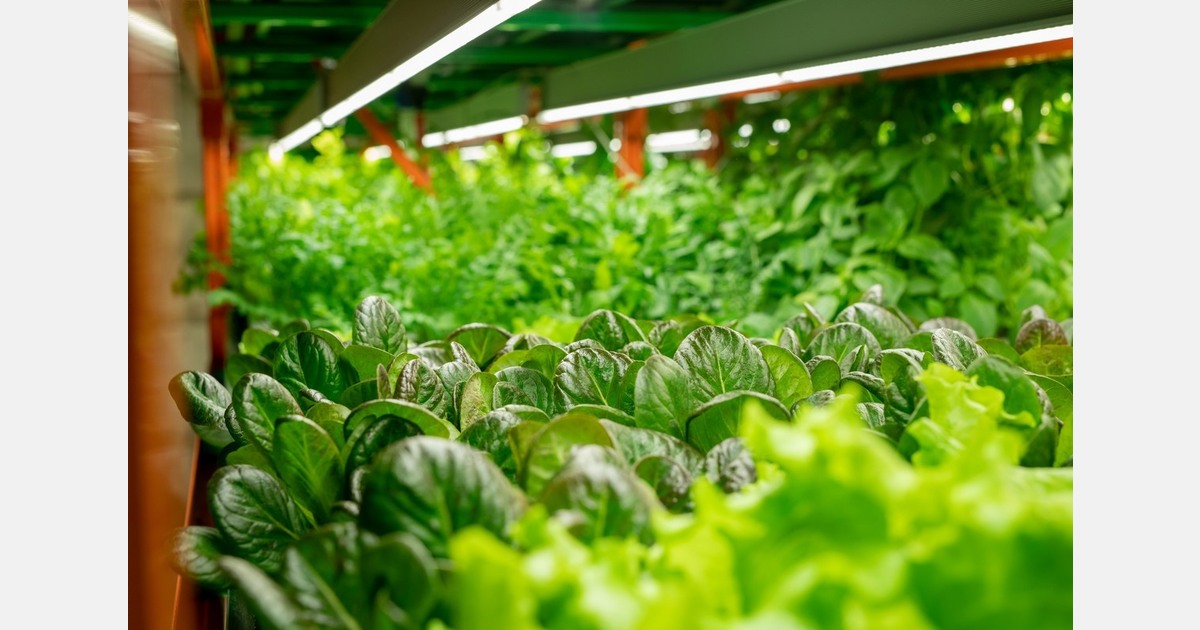
Stacked Farm prepares to open Melbourne vertical farm, advances first US facility

Source: VFD.com
Stacked Farm prepares to open Melbourne vertical farm, advances first US facility Stacked Farm is preparing to open its A$150 million Melbourne mega-farm as the Australian agritech company exports its automated farming technology to the United States, establishing a Las Vegas hub and advancing its first US$126 million American production facility. © Stacked Farm The Melbourne facility, scheduled to open in Q4 2026, represents the most advanced deployment of the Stacked Farm platform to date and will serve as the operational blueprint for future sites globally.
Developed and validated in Australia, the company's proprietary automation, robotics and controlled-environment farming technology is now being deployed in the United States through a Las Vegas hub and the development of its first large-scale California production farm, demonstrating how Australian innovation can produce fresh leafy greens year-round in some of the world's most challenging growing environments. To support the next phase of growth, Stacked Farm has commenced an A$45 million capital raise to provide working capital for expansion across its Australian and United States operations.
Spanning 10,000 square meters inside a fully enclosed, climate-controlled environment, the Melbourne facility will produce 3.4 million kilograms of leafy greens and herbs annually. Powered by Stacked Farm's proprietary AI-driven automation, the site is designed to deliver consistently clean, high-quality, affordable produce year-round, safeguarding supply from weather-related disruptions.
Why this matters: For operators, this is a water-management story. The useful signal is that direct substrate measurements can help cut drain loss materially without giving up yield or fruit quality, which is exactly the kind of controllable efficiency gain a facility can build on.
Frequently Asked Questions
Why does substrate sensing matter in free-drain strawberry systems?
Because drain percentage tells a grower what already happened, while substrate moisture and EC data show root-zone conditions directly. That makes it easier to cut water loss without guessing.
What is the operator takeaway from this trial?
If the thresholds are understood well enough, growers can reduce drain water materially while protecting yield and fruit quality, which makes sensing an operational tool instead of a reporting tool.