
"Steaming kills pathogens and weeds but does not alter the particle size or structure"
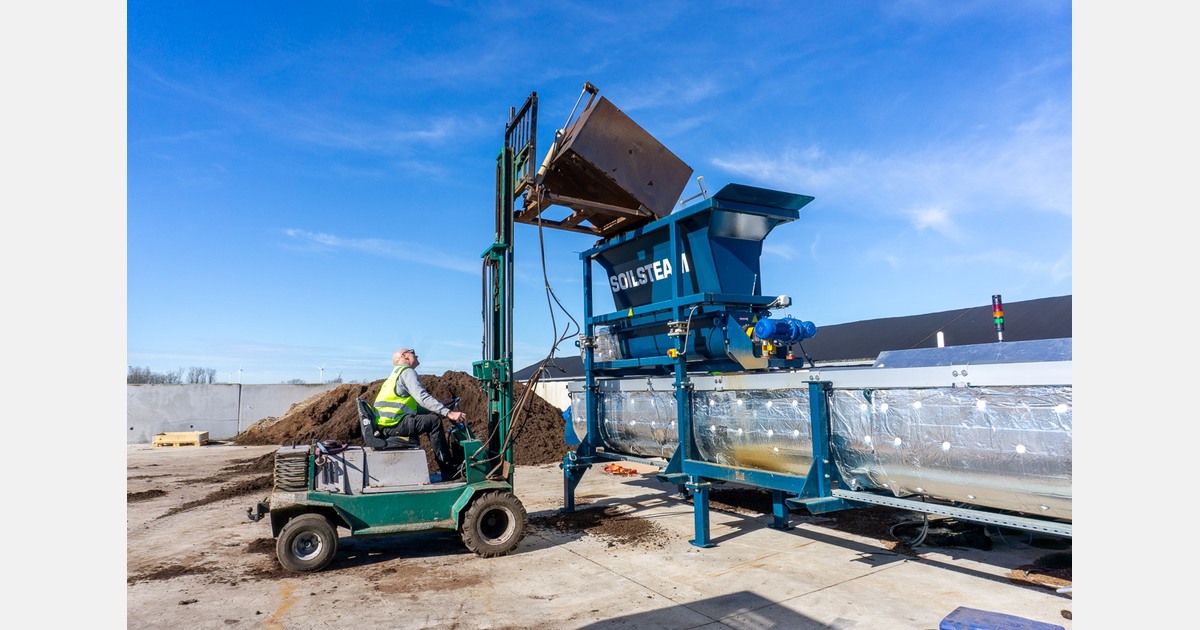
Source: VFD.com
Thanks to the result and the trust these growers have in the procedure, we can now observe practical outcomes directly in growers' operations, not just in a research setting." © Arlette Sijmonsma | VerticalFarmDaily.com The process on location The steaming took place using a mobile installation equipped with a screw conveyor system, which ensures that every particle of the substrate passes through the steam chamber. Energy consumption for the process varied from 10 to 90 kW per cubic meter, depending on the moisture content and density of the substrate.
Last year, the research center also tested mixing steamed substrate with fresh substrate in ratios of 20%, 40%, 60%, and 100%. Observations from past trials Research on steamed substrate has been ongoing since 2025.
Why this matters: This matters when it gives operators a clearer way to manage water, nutrients, and root-zone risk. That kind of control usually improves both resource efficiency and crop consistency.
Frequently Asked Questions
What should growers evaluate before changing a lighting strategy?
They should look at crop type, canopy structure, current light distribution, energy cost, expected yield gain, and whether the new strategy improves whole-canopy efficiency.
Why is light distribution often as important as light quantity?
Because adding more photons to already saturated leaves does less work than improving how light reaches the parts of the canopy that are still underperforming.


