
Study maps microclimate heterogeneity across vertical farm layers
Source: VFD.com
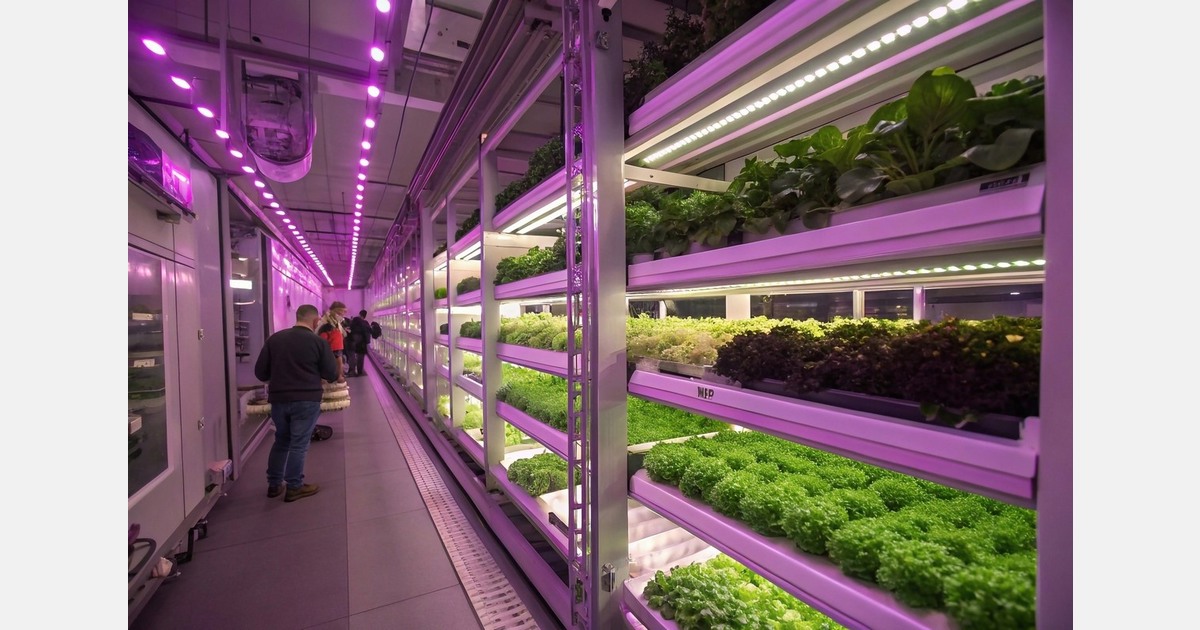
The model resolves coupled airflow, heat, and moisture transport to capture plant-relevant microclimate conditions. A representative indoor vertical farm was simulated under different combinations of centralized air-conditioning, circulation fans, and water-cooled LED systems.
Canopy-scale air temperature, relative humidity, leaf surface temperature, and transpiration were analyzed, and microclimate uniformity was quantified using a uniformity index. The results show that circulation fans are most effective in reducing canopy-scale temperature non-uniformity by enhancing convective heat exchange, while water-cooled LEDs primarily reduce the mean thermal load by mitigating heat release at the source.
Canopy-scale analysis further reveals that crop-level microclimate responses are not directly coupled to indoor air humidity conditions. These findings highlight the importance of canopy-scale evaluation and demonstrate that combining localized airflow enhancement with source-level thermal mitigation can achieve uniform thermal environments in indoor vertical farms without major modifications to centralized HVAC systems.
Why this matters: For operators, this is a water-management story. The useful signal is that direct substrate measurements can help cut drain loss materially without giving up yield or fruit quality, which is exactly the kind of controllable efficiency gain a facility can build on.
Frequently Asked Questions
Why does substrate sensing matter in free-drain strawberry systems?
Because drain percentage tells a grower what already happened, while substrate moisture and EC data show root-zone conditions directly. That makes it easier to cut water loss without guessing.
What is the operator takeaway from this trial?
If the thresholds are understood well enough, growers can reduce drain water materially while protecting yield and fruit quality, which makes sensing an operational tool instead of a reporting tool.


