
Using a PCB-based controller to monitor vertical growing
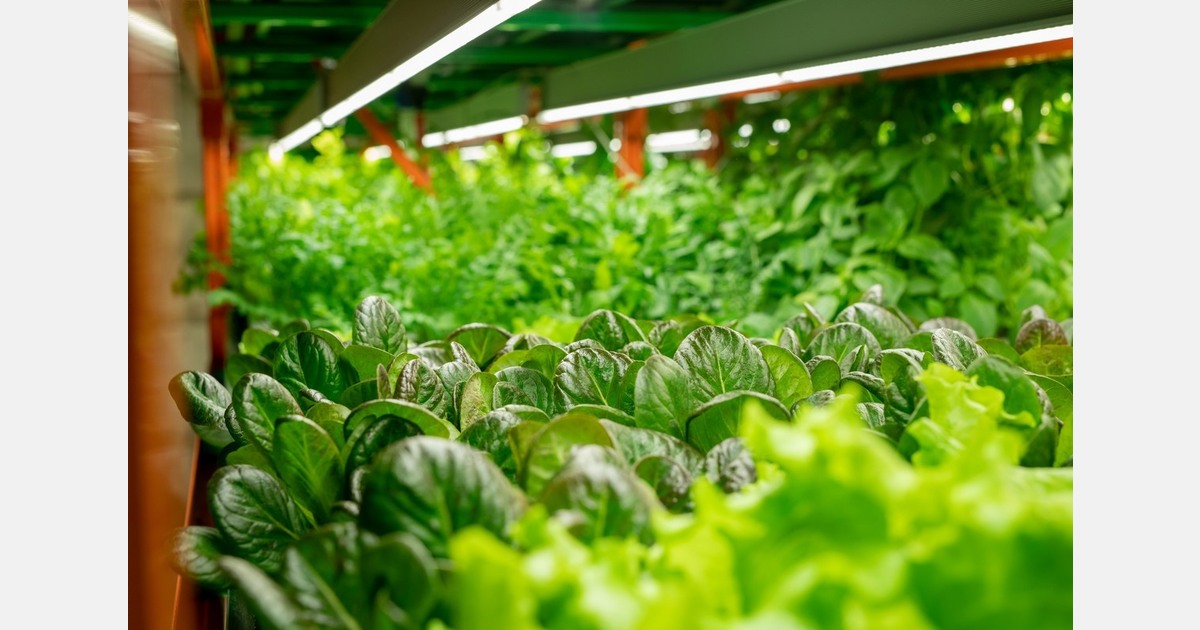
Source: VFD.com
This study aims to develop a compact and reliable farm monitoring system that improves water efficiency, enhances system stability and supports scalable deployment through a PCB-based integrated hardware architecture. To achieve this, an automated farm monitoring controller was designed and implemented using an ESP32 microcontroller integrated with a capacitive soil moisture sensor, a DHT22 temperature-humidity sensor, a PIR motion sensor, a SIM800L GSM module, a relay switching unit, and a 12 V water pump.
The system firmware was developed using the Arduino IDE to support threshold-based irrigation control, real-time environmental monitoring, motion detection, and cloud-based data transmission via ThingSpeak. Performance evaluation was conducted in a controlled three-layer vertical farming setup to assess irrigation responsiveness, communication reliability, and overall system stability.
The controller maintained optimal soil moisture levels by automatically activating irrigation below 30% and deactivating it above 70%, achieving an average pump response time of approximately 1.2 seconds. In addition, cloud communication reliability exceeded 95% across repeated trials, while environmental sensing and motion detection modules consistently delivered accurate and stable outputs.
Why this matters: For operators, this is a water-management story. The useful signal is that direct substrate measurements can help cut drain loss materially without giving up yield or fruit quality, which is exactly the kind of controllable efficiency gain a facility can build on.
Frequently Asked Questions
Why does substrate sensing matter in free-drain strawberry systems?
Because drain percentage tells a grower what already happened, while substrate moisture and EC data show root-zone conditions directly. That makes it easier to cut water loss without guessing.
What is the operator takeaway from this trial?
If the thresholds are understood well enough, growers can reduce drain water materially while protecting yield and fruit quality, which makes sensing an operational tool instead of a reporting tool.


