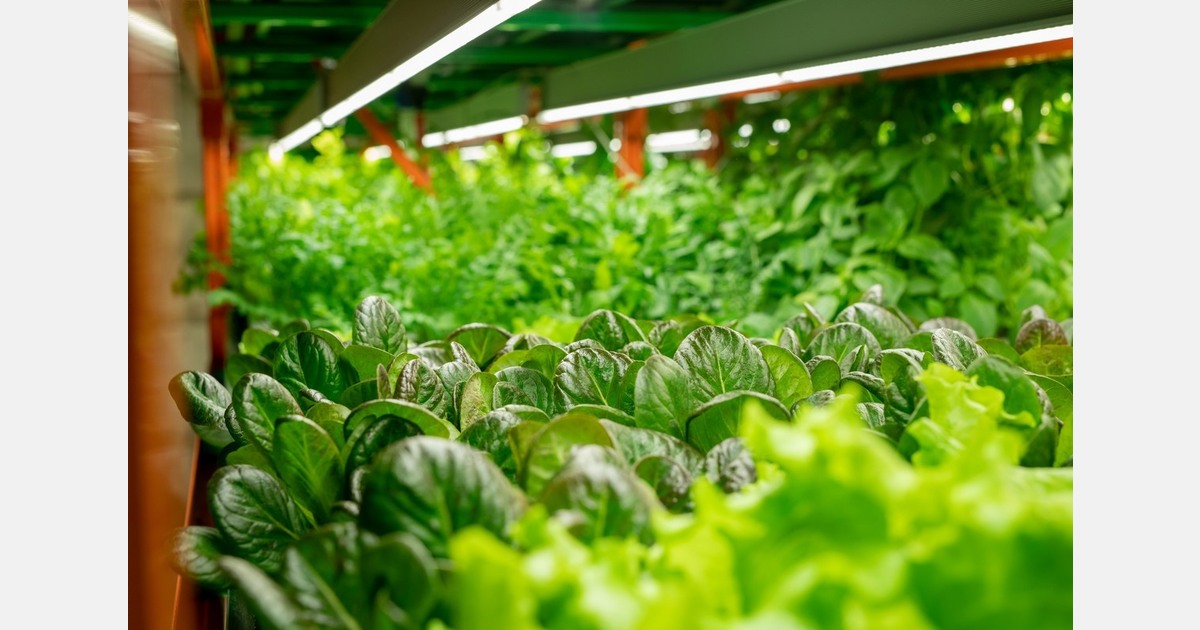
Using data to change the way we grow

Source: VFD.com
Using data to change the way we grow Just outside Ahmedabad, inside a climate-controlled facility the size of a small industrial estate, a quiet transition in how food is produced is taking shape. This is part of the early phase of what Ahmedabad-based agritech company Brio Agri describes as one of India's largest hydroponic parks, a 100-acre (approximately 40.47 hectares) controlled environment agriculture system built around predictability through data.
The model reflects a growing attempt to reduce agricultural uncertainty. The company is led by founder and chairman Pravin Patel, who grew up closely observing these variables in traditional farming systems and argues that the solution lies not in better luck, but in better control.
"One of the biggest limitations of traditional farming has always been the difficulty of accurately forecasting production outcomes," he says. After more than a decade of operating smaller farms and training programmes, the company is now scaling its controlled-environment model, 'Unnati Project' in Talod, Gujarat, where the first phase of its 180-acre (approximately 72.84 hectares) development is already operational.
Why this matters: For operators, this is a water-management story. The useful signal is that direct substrate measurements can help cut drain loss materially without giving up yield or fruit quality, which is exactly the kind of controllable efficiency gain a facility can build on.
Frequently Asked Questions
Why does substrate sensing matter in free-drain strawberry systems?
Because drain percentage tells a grower what already happened, while substrate moisture and EC data show root-zone conditions directly. That makes it easier to cut water loss without guessing.
What is the operator takeaway from this trial?
If the thresholds are understood well enough, growers can reduce drain water materially while protecting yield and fruit quality, which makes sensing an operational tool instead of a reporting tool.