Greenhouse agrivoltaics trial in Greece reports energy surplus while maintaining crop performance
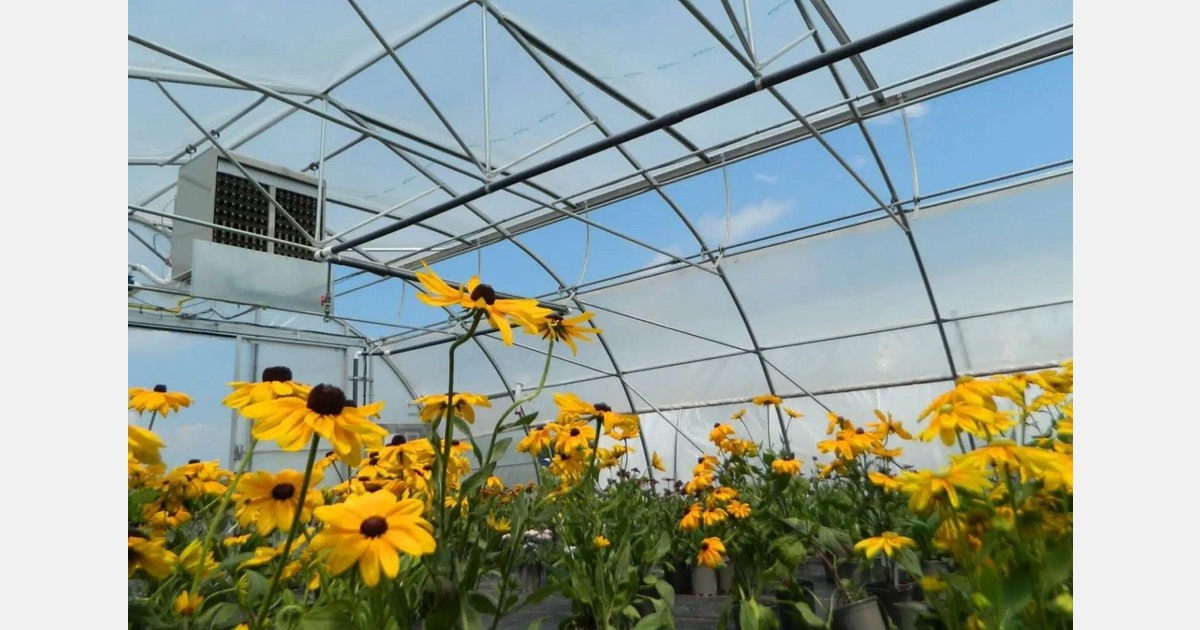
Researchers at the University of Thessaly have demonstrated that solar-tracking photovoltaic panels installed inside greenhouses can generate a 30% energy surplus while maintaining stable crop performance across spring,...

Source: HortiDaily
Professor Nikolaos Katsoulas, Director of LACEC, highlights the importance of this research: "The REGACE project allowed us to test continuously for more than 20 months the effect of different shading strategies and PV tracking modes on greenhouse microclimate, crop performance and energy yield. The installed agrivoltaic system at LACEC's greenhouses has a total installed power of 14.4 kW (approximately 0.03 kW per square meter of greenhouse surface), with an initial investment cost of approximately 900 euros per kW.
The energy consumption for the operation of the greenhouse systems (including fan and pad system needs) amounted to 0.14 kWh per square meter per day, creating a surplus of electricity of about 30% (approximately 0.035 kWh per square meter per day). Correspondingly, with the net billing method, where the selling price is approximately 0.07 euros per kWh, the payback time is 6 years." © University of Thessaly – Laboratory of Agricultural Constructions and Environmental Control (LACEC) Professor Chrysoula Papaioannou, project leader for UTH, emphasises the significance of the findings: "The energy surplus we observed is a strong indication that greenhouse agrivoltaics can evolve into a reliable, self-supporting system.
Why this matters: This matters when it gives operators a clearer way to manage water, nutrients, and root-zone risk. That kind of control usually improves both resource efficiency and crop consistency.
Frequently Asked Questions
What should growers evaluate before changing a lighting strategy?
They should look at crop type, canopy structure, current light distribution, energy cost, expected yield gain, and whether the new strategy improves whole-canopy efficiency.
Why is light distribution often as important as light quantity?
Because adding more photons to already saturated leaves does less work than improving how light reaches the parts of the canopy that are still underperforming.
{"@context": "https://schema.org", "@type": "FAQPage", "mainEntity": [{"@type": "Question", "name": "What should growers evaluate before changing a lighting strategy?", "acceptedAnswer": {"@type": "Answer", "text": "They should look at crop type, canopy structure, current light distribution, energy cost, expected yield gain, and whether the new strategy improves whole-canopy efficiency."}}, {"@type": "Question", "name": "Why is light distribution often as important as light quantity?", "acceptedAnswer": {"@type": "Answer", "text": "Because adding more photons to already saturated leaves does less work than improving how light reaches the parts of the canopy that are still underperforming."}}]}