"Is the traditional glass greenhouse model still the most secure investment, given the scale of capital required?"
Source: HD.com
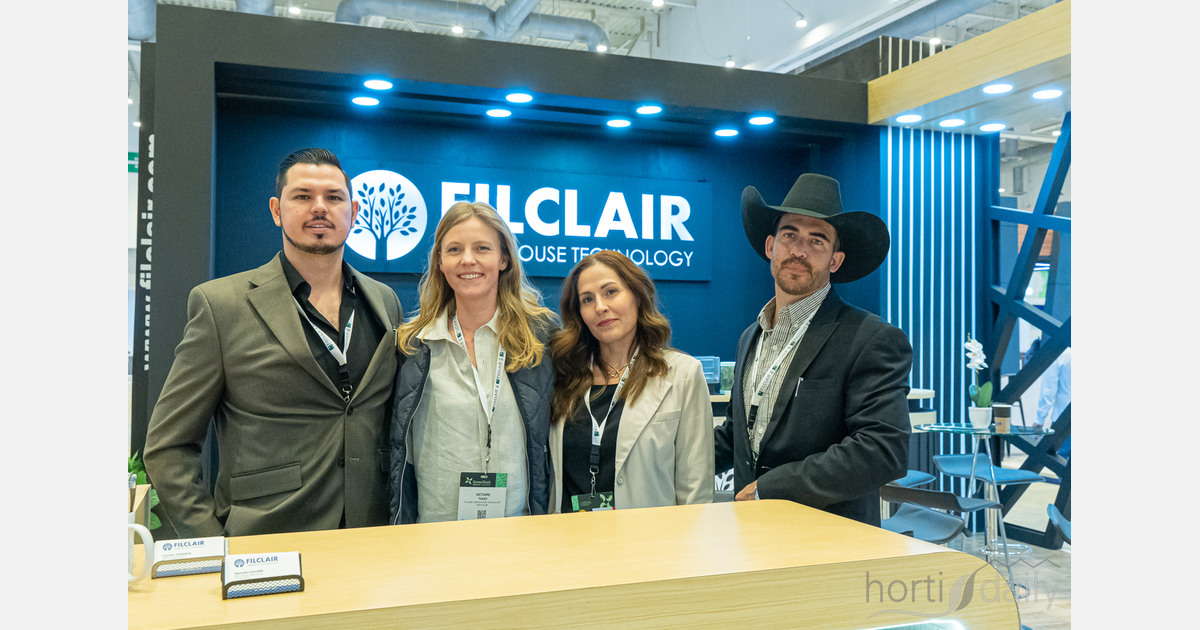
I think this balance between innovation and continuity is the biggest challenge we face every day." © Marta del Moral Arroyo | HortiDaily.com Samuel Chavez, Victoire Thery, Carmen González, and Nematini Aguirre, Filclair, at Greentech Americas 2026 Growers managing Her appointment comes at a time when growers are managing energy costs, climate variability, and long-term investment decisions. The company has delivered more than 5,000 hectares of greenhouses across five continents and in more than 65 countries.
In the 1960s, Filclair introduced flexible plastic coverings, and it continues to invest in research and development, supported by a portfolio of patents. Founded in 1963 by Yvon Dalle and Benoit Bonduelle, the company continues to build on its history in flexible greenhouse design while adapting its systems to current production conditions.
Why this matters: This matters when it gives operators a clearer way to manage water, nutrients, and root-zone risk. That kind of control usually improves both resource efficiency and crop consistency.
Frequently Asked Questions
What should growers evaluate before changing a lighting strategy?
They should look at crop type, canopy structure, current light distribution, energy cost, expected yield gain, and whether the new strategy improves whole-canopy efficiency.
Why is light distribution often as important as light quantity?
Because adding more photons to already saturated leaves does less work than improving how light reaches the parts of the canopy that are still underperforming.


