New hybrid approach reinforces grower support in Leamington
Source: HD.com
The transition ensures continuity for growers in one of North America's most concentrated greenhouse production areas, with Amos working closely alongside Ali Mohammad to maintain both technical and commercial support. "This role lets me stay close to the science while also being more directly accountable to the relationships we've built in Leamington." © Philips Focus on data-driven LED optimization His work continues to center on LED lighting strategies, with a focus on optimizing Daily Light Integral (DLI), refining crop steering, and improving energy-use efficiency.
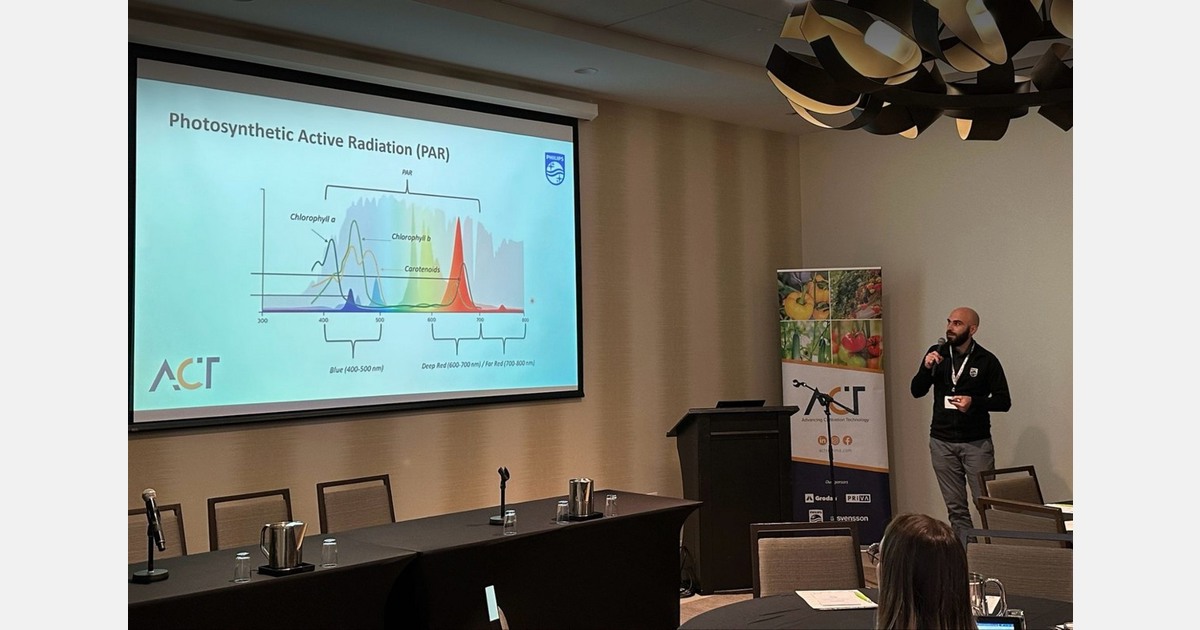
"We're seeing that reducing heat input by more than 40% in tomato production is achievable with the right combination of lighting strategy and crop management." The trial is currently operating at high light intensities, with results indicating stable crop performance under reduced thermal input, an increasingly important factor as energy costs remain volatile. © Philips Industry alignment at ACT Summit These findings were presented at the Advancing Cultivation Technology (ACT) Leamington Grower Summit, which brought together more than 120 growers and industry stakeholders.
Why this matters: This matters when it gives operators a clearer way to manage water, nutrients, and root-zone risk. That kind of control usually improves both resource efficiency and crop consistency.
Frequently Asked Questions
What should growers evaluate before changing a lighting strategy?
They should look at crop type, canopy structure, current light distribution, energy cost, expected yield gain, and whether the new strategy improves whole-canopy efficiency.
Why is light distribution often as important as light quantity?
Because adding more photons to already saturated leaves does less work than improving how light reaches the parts of the canopy that are still underperforming.