🎥 Digital twins: Heritable Ag combines AI, genomics and environmental data to slash R&D timelines
Source: AgFunderNews
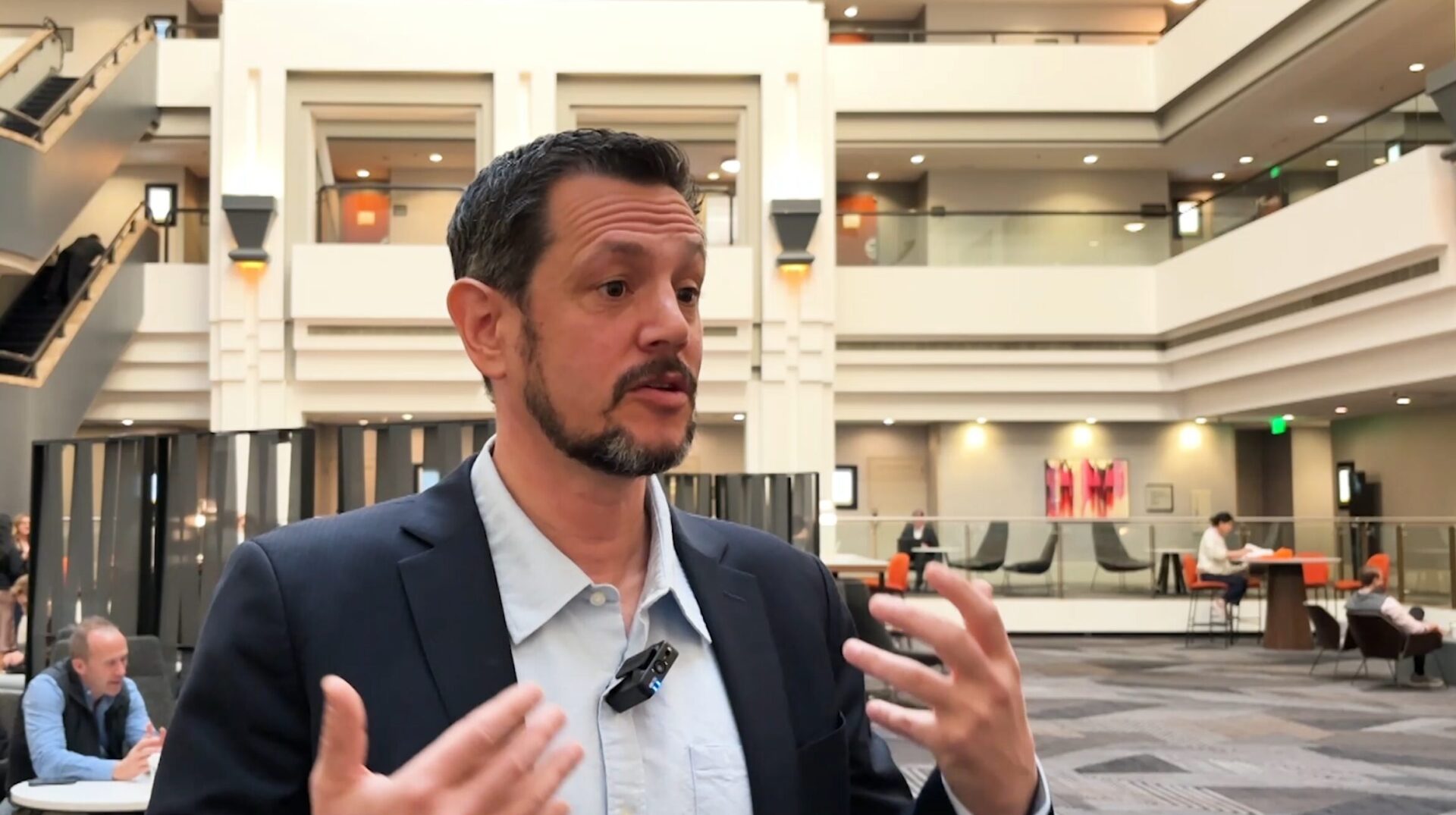
Theoretical physicist turned agtech entrepreneur Brad Zamft, PhD, at Google X spinout Heritable Agriculture, is on a mission to make plant breeding faster and cheaper. AgFunderNews (AFN) caught up with Zamft (BZ) at World Agri-Tech in San Francisco to discuss digital twins for crops, AI-driven gene discovery, and how combining AI, genomics, and high-resolution environmental data could dramatically compress R&D timelines in crop development.
BZ : What Heritable provides is a comprehensive solution to improving crops. This spans the ability to simulate real plants in real fields.
We make digital twins, incorporating soil and weather to 10-meter resolution anywhere in the world. We also work on the ability to identify—for traits that are controlled by a few or a few dozen genes—the causative genes, and we’ve shown that we can do that with unprecedented accuracy.
Why this matters: For operators, the real question is whether the sensing, control, or data layer creates faster and better decisions. The facilities that win are the ones that turn visibility into tighter control and tighter control into better outcomes.
Frequently Asked Questions
Why does LED fixture selection matter in controlled environment agriculture?
Lighting decisions affect both crop performance and energy intensity. Fixture efficiency, spectral control, and placement all influence how much value a facility gets from every kilowatt-hour.
What should growers evaluate before adopting new LED systems?
Growers should look at fixture efficiency, controllability, crop-specific use case, integration with existing controls, and the operational payback period instead of treating lighting as a standalone hardware purchase.