Innovative saffron project secures Innovate UK ADOPT funding to tackle crop disease
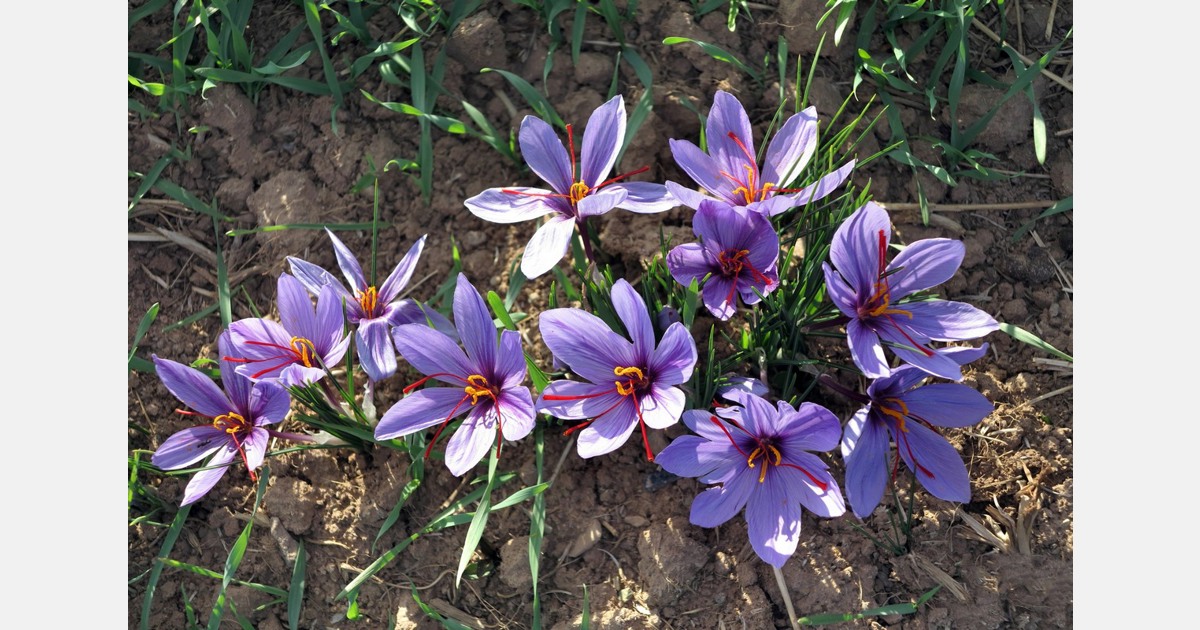
Source: VFD.com
in collaboration with the University of Warwick and Farm Urban Ltd., the project will trial a novel, two-stage approach combining early disease detection with sustainable biological control methods. The Greenhouse Innovation Consortium (GIC) is acting as a facilitating partner, supporting knowledge exchange, stakeholder engagement, and ensuring the project's outcomes are translated effectively into practice across the wider horticulture sector.
The project will develop a rapid, non-destructive method to detect infected saffron corms using gas-sensing technology, alongside testing environmentally responsible biofungicides and biocides to suppress disease in both field and controlled-environment systems. Dr Peter Gould, lead applicant and Director of Plant Research Ltd., said: "Saffron is a high-value crop with huge potential for UK agriculture, but corm rot has been a major barrier to scaling production.
This project brings together cutting-edge detection technology with practical, sustainable disease management approaches. By identifying infection early and preventing its spread, we can transform how growers manage risk and unlock the full potential of saffron and other bulb crops." Beyond saffron, the project's findings are expected to benefit a wide range of horticultural systems, including other bulb crops and indoor farming operations, supporting more sustainable and resilient food production across the UK.
Why this matters: For operators, this is a water-management story. The useful signal is that direct substrate measurements can help cut drain loss materially without giving up yield or fruit quality, which is exactly the kind of controllable efficiency gain a facility can build on.
Frequently Asked Questions
Why does substrate sensing matter in free-drain strawberry systems?
Because drain percentage tells a grower what already happened, while substrate moisture and EC data show root-zone conditions directly. That makes it easier to cut water loss without guessing.
What is the operator takeaway from this trial?
If the thresholds are understood well enough, growers can reduce drain water materially while protecting yield and fruit quality, which makes sensing an operational tool instead of a reporting tool.


