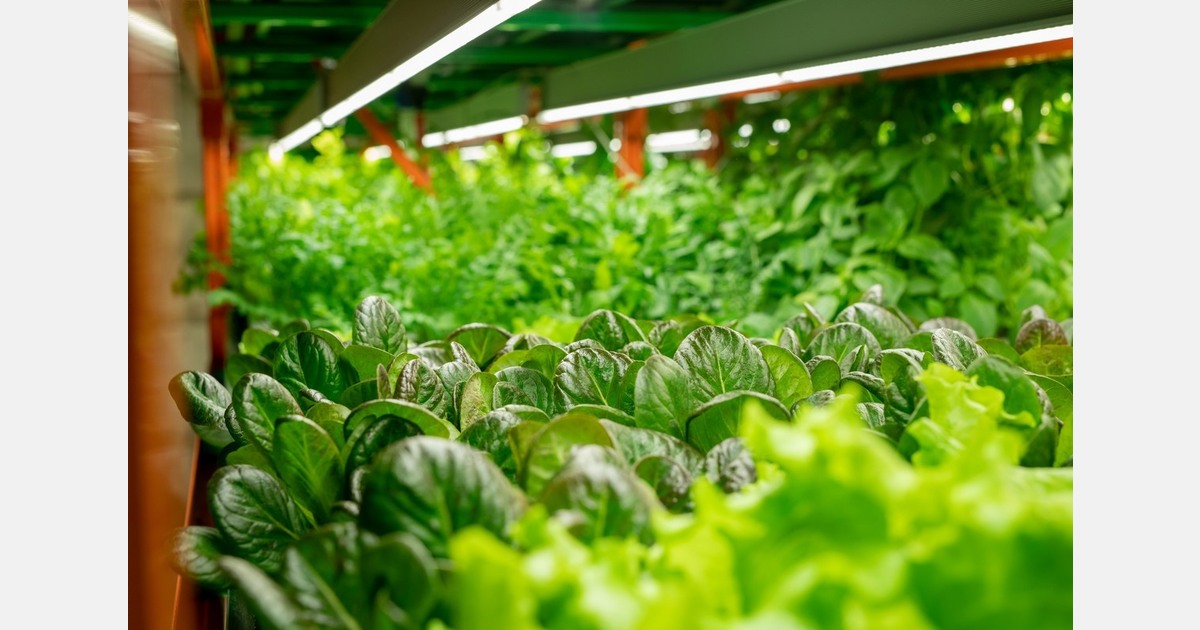
"Technologies which only belonged to certain industrial businesses have now become affordable for growers"

Source: VFD.com
"What I see is that some technologies which before belonged only to certain industrial businesses have now become affordable for growers," Davide explains. "If you wanted to purchase a computer in the 1980s, it cost like a house.
Rising wages in regions traditionally associated with lower labour costs are making automation economically attractive in a wider range of markets. Beyond cost, labour availability has become a significant challenge.
"You may need a maintenance manager, for example, where before you did not." © Eelkje Pulley | VerticalFarmDaily.com Fabio Camisa, Export Manager at Da Ros (on the left) and Davide Uliana, Sales Project Manager at Da Ros (on the right) at Greentech Amsterdam Data collection becomes a new requirement Alongside automation, growers are increasingly requesting machine-generated data. Maybe you do not need 10,000 data points; you need just a few important numbers." The next frontier: Practical AI applications He sees artificial intelligence as the next major development area for greenhouse automation.
Why this matters: For operators, this is a water-management story. The useful signal is that direct substrate measurements can help cut drain loss materially without giving up yield or fruit quality, which is exactly the kind of controllable efficiency gain a facility can build on.
Frequently Asked Questions
Why does substrate sensing matter in free-drain strawberry systems?
Because drain percentage tells a grower what already happened, while substrate moisture and EC data show root-zone conditions directly. That makes it easier to cut water loss without guessing.
What is the operator takeaway from this trial?
If the thresholds are understood well enough, growers can reduce drain water materially while protecting yield and fruit quality, which makes sensing an operational tool instead of a reporting tool.