Japanese companies join forces to power strawberry growing

Source: VFD.com
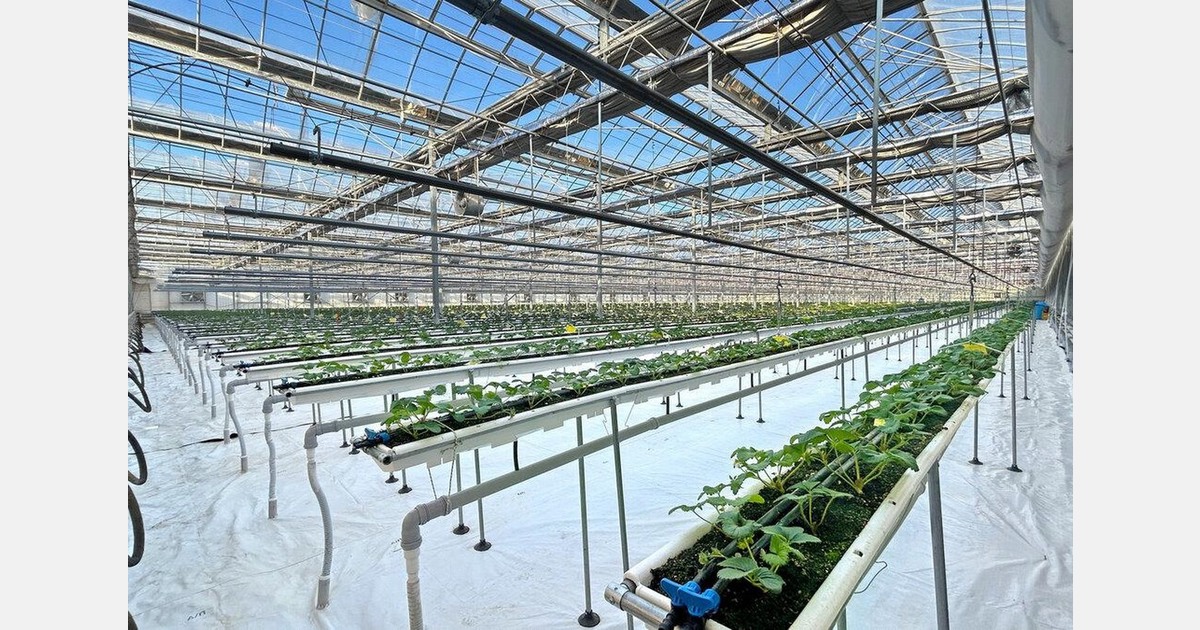
As we provide the news for free, we are relying on revenues from our banners. HarvestX has developed the world's first robot capable of automatically pollinating strawberries and is advancing automated cultivation solutions for plant factories by leveraging AI and robotics.
In recent years, factors such as extreme heat and drought caused by climate change, along with a decline in the agricultural workforce, have made the establishment of stable food production systems a global challenge. Against this backdrop, indoor vertical farms capable of producing high-quality crops regardless of weather conditions are attracting increasing attention.
In addition to enabling pesticide-free cultivation, these farms can significantly reduce water usage compared to open-field farming. Further, locating production closer to consumption areas helps shorten transportation distances and reduces CO2 emissions.
Why this matters: For operators, the real question is whether the sensing, control, or data layer creates faster and better decisions. The facilities that win are the ones that turn visibility into tighter control and tighter control into better outcomes.
Frequently Asked Questions
Why does LED fixture selection matter in controlled environment agriculture?
Lighting decisions affect both crop performance and energy intensity. Fixture efficiency, spectral control, and placement all influence how much value a facility gets from every kilowatt-hour.
What should growers evaluate before adopting new LED systems?
Growers should look at fixture efficiency, controllability, crop-specific use case, integration with existing controls, and the operational payback period instead of treating lighting as a standalone hardware purchase.