Low-cost sensor system detects plant salt stress before visible damage occurs
A team led by Penn State researchers has built a low-cost sensor system that detects salt stress in plants by measuring volatile organic compounds (VOCs) they emit, achieving up to 99.
Source: HortiDaily
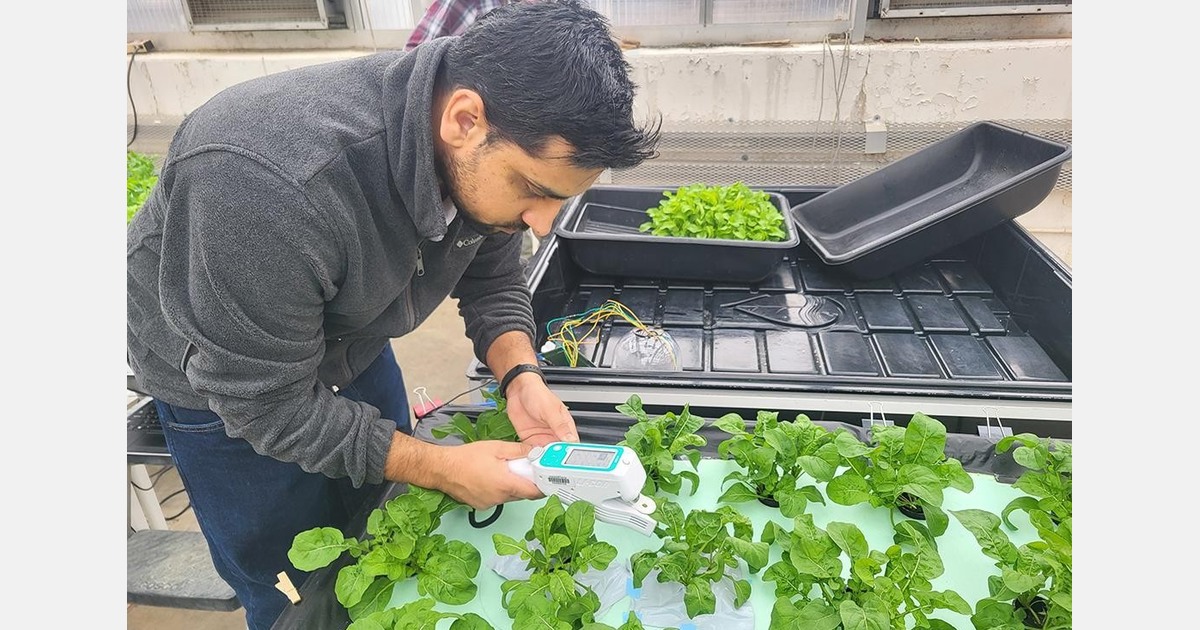
A team led by Penn State researchers has built a low-cost sensor system that detects salt stress in plants by measuring volatile organic compounds (VOCs) they emit, achieving up to 99.15% accuracy in identifying stress levels. The proof-of-concept study, published in IEEE Sensors Journal, used metal-oxide semiconductor sensors costing under $1 each to detect distinct gas patterns from healthy, moderately stressed, and severely stressed arugula grown in hydroponic systems.
The researchers placed plants under dome enclosures that captured emitted gases, measured by sensors at the top of the domes over eight days. Machine learning algorithms then classified the gas patterns by stress level. The hydroponic setup allowed precise control of sodium chloride concentrations, isolating salinity as the variable being detected.
"The low-cost sensor system we developed detects volatile organic compounds released by plants when stressed. Think of it like an electronic nose for crops," said co-author Francesco Di Gioia, Penn State associate professor of vegetable crop science. The researchers note that technical improvements in sensor hardware and networking are needed before field-scale deployment.
Why this matters: Salt buildup is one of the most common root-zone problems in both hydroponic and soil-based CEA, and it typically goes undetected until yield impact is already underway. Sub-dollar VOC sensors that flag stress before visual symptoms appear could become a meaningful complement to existing EC and pH monitoring. The 99% accuracy in controlled conditions is promising, though the real test will be performance in a production greenhouse with multiple environmental variables in play.
Frequently Asked Questions
Can sensors detect plant stress before visible symptoms appear?
Yes. Penn State researchers developed a low-cost sensor system using metal-oxide semiconductor sensors (under $1 each) that detects volatile organic compounds emitted by salt-stressed plants, achieving 99.15% accuracy in distinguishing between healthy, moderately stressed, and severely stressed plants before visible damage occurs. Published in IEEE Sensors Journal (2026).
What percentage of US irrigated farmland is affected by soil salinity?
According to the U.S. Department of Agriculture, soil salinity affects roughly 30% of U.S. irrigated land, hindering crop growth and reducing yields by restricting plant water uptake.
How do VOC sensors detect salt stress in hydroponic crops?
Plants emit different patterns of volatile organic compounds (VOCs) depending on their stress level. Penn State researchers placed hydroponic arugula under dome enclosures with metal-oxide semiconductor sensors that measured air chemistry changes over eight days. Machine learning algorithms classified the gas patterns by stress level with 99.15% accuracy.