
“Managing the full water cycle starts with water quality for the crop and continues with reusing water whenever possible"
Source: HD.com
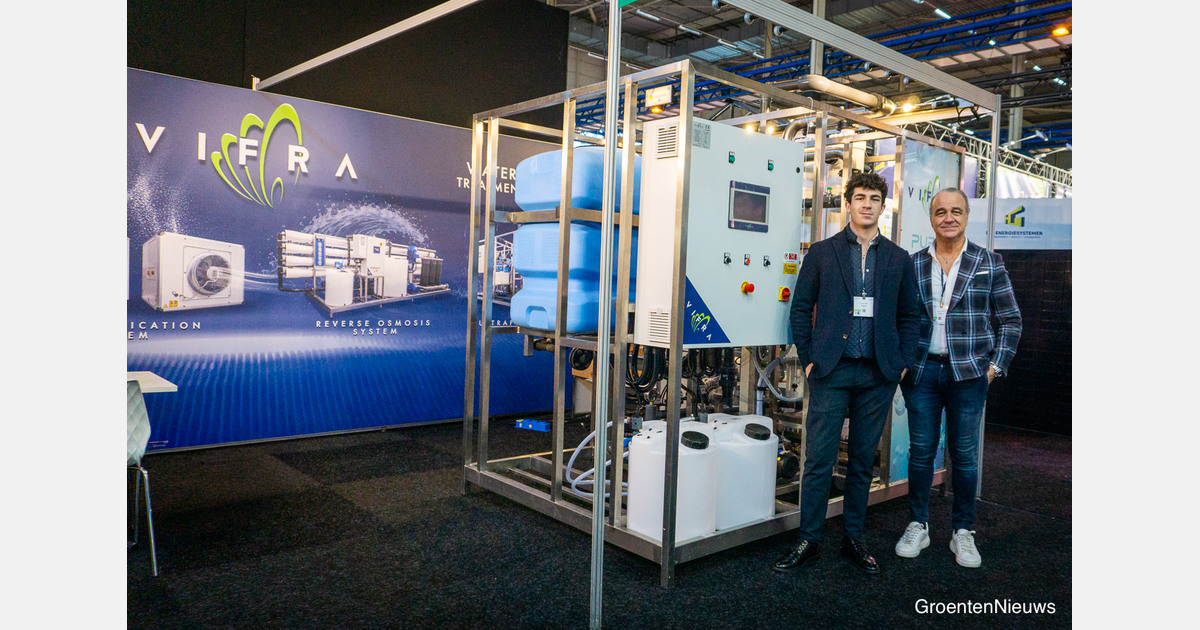
Riccardo Russo, Vifra: “Managing the full water cycle starts with water quality for the crop and continues with reusing water whenever possible" Water management is an integral part of modern greenhouse operations, driven by increasing attention to resource efficiency and stricter recirculation requirements. "Managing the full cycle starts with water quality for the crop and continues with reusing water whenever possible", says Riccardo Russo, highlighting the role of ultrafiltration (UF) and reverse osmosis (RO) in managing irrigation cycles and nutrient recovery.
"Managing the full cycle starts with water quality for the crop and continues with reusing water whenever possible." © Arlette Sijmonsma | HortiDaily.com Technical strategies for source water Achieving a consistent irrigation baseline is a primary challenge for growers dealing with diverse water sources, from well water and municipal supplies to harvested rainwater. Vifra, as Riccardo explains, offers solutions to make "every type of water ready to use as irrigation water for the greenhouse." And those installations can be diverse: While rainwater is often viewed as an ideal source, its quality can be compromised during collection and storage.
Why this matters: This matters when it gives operators a clearer way to manage water, nutrients, and root-zone risk. That kind of control usually improves both resource efficiency and crop consistency.
Frequently Asked Questions
Why do retrofit and environmental-control choices matter so much?
Because these decisions affect every crop cycle that follows. A better control strategy can improve consistency and efficiency, while a poor one can lock in operating drag.
What should operators focus on when reading design or retrofit stories?
They should focus on what changed operationally: better climate stability, lower energy use, improved crop balance, easier labor, or cleaner control over inputs.


