NC farmer weighs in as Persian Gulf fertilizer crisis widens: ‘You will see a massive decline in yield and acres’
Source: AgFunderNews
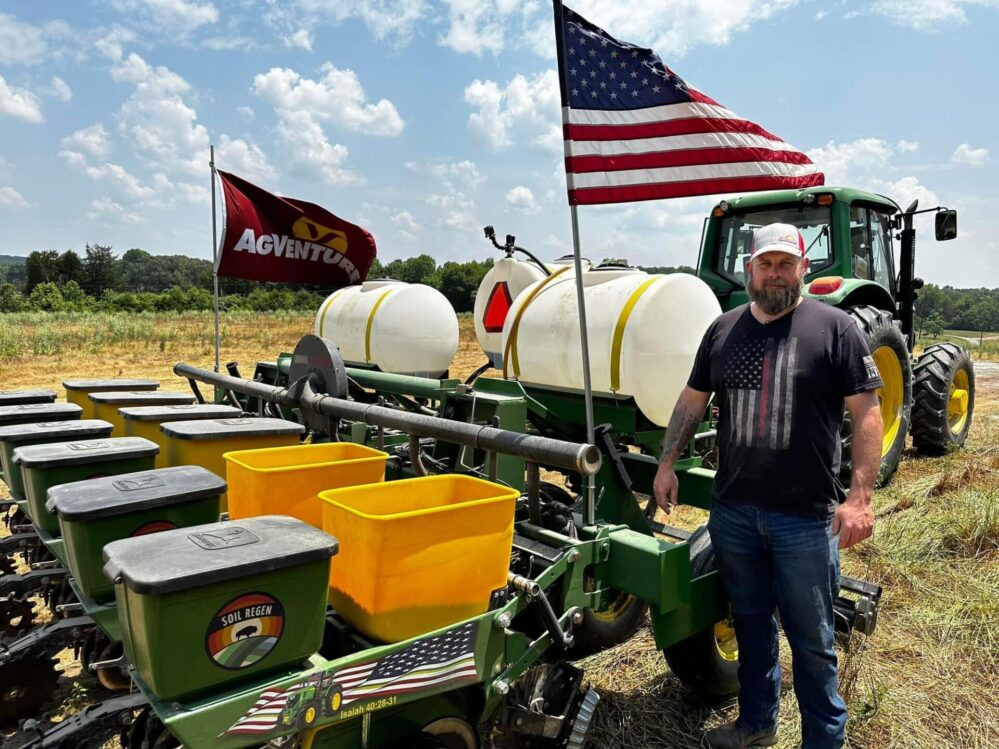
Rising costs and fertilizer shortages —turbocharged by war in the Persian Gulf—are already reshaping planting decisions for US farmers, says one record-holding farmer growing corn and soybeans, along with barley, oats, triticale, and wheat on 650-acres in Hickory, North Carolina. Russell Hedrick holds his state’s record for soybean yield and the world dryland corn yield record , and is now building Revolution Drones , a business specializing in domestically assembled spray drones tailored for American farming.
He told AgFunderNews : “Most of the farmers I met and spoke with over the last month are not secured for their spring fertilizer,” noting that his own farm had to scramble to secure inputs as suppliers “were not ready for the early spring and not stocked on everything we needed.” An earlier planting season—“three weeks earlier this year than last year”—further intensified the squeeze. Hedrick estimates his are up “at least $15k to $20k,” forcing him to “buy the bare minimum to get the crop planted.” He added: “We plan to top dress mid-season to see if current prices offer any relief as demand goes down.
I think that this will have a much bigger impact than what is coming out of Washington D.C. I attended a few meetings in March and heard numbers as high as 40% acre changes from corn to soybeans [which require far less fertilizer], solely because fertilizer couldn’t be applied before planting.
Why this matters: For operators, the real question is whether the sensing, control, or data layer creates faster and better decisions. The facilities that win are the ones that turn visibility into tighter control and tighter control into better outcomes.
Frequently Asked Questions
Why does LED fixture selection matter in controlled environment agriculture?
Lighting decisions affect both crop performance and energy intensity. Fixture efficiency, spectral control, and placement all influence how much value a facility gets from every kilowatt-hour.
What should growers evaluate before adopting new LED systems?
Growers should look at fixture efficiency, controllability, crop-specific use case, integration with existing controls, and the operational payback period instead of treating lighting as a standalone hardware purchase.