New hybrid approach reinforces grower support in Leamington
Source: HD.com
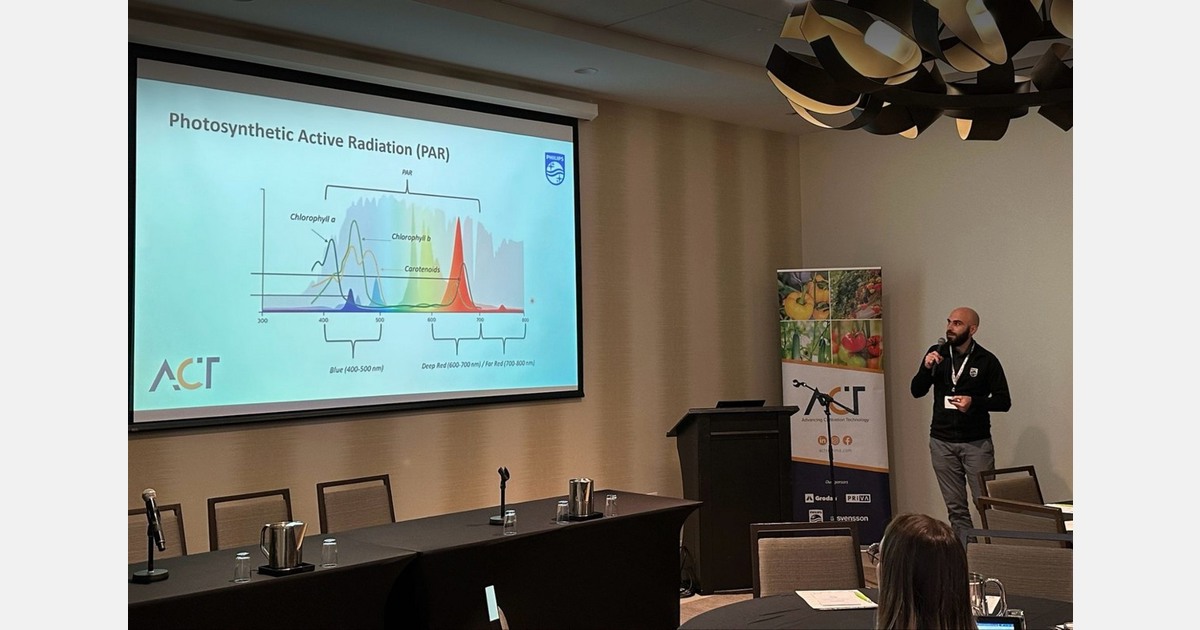
As we provide the news for free, we are relying on revenues from our banners. New hybrid approach reinforces grower support in Leamington Following the transition of Jake Houweling to Source.ag , Amos Bassi has stepped into an expanded hybrid role at Philips Horticulture LED Solutions, combining his responsibilities as Senior Plant Specialist with Key Account Management for the Leamington region.
The transition ensures continuity for growers in one of North America's most concentrated greenhouse production areas, with Amos working closely alongside Ali Mohammad to maintain both technical and commercial support. "I want growers to know they are taken care of," Amos shares.
"This role lets me stay close to the science while also being more directly accountable to the relationships we've built in Leamington." © Philips Focus on data-driven LED optimization His work continues to center on LED lighting strategies, with a focus on optimizing Daily Light Integral (DLI), refining crop steering, and improving energy-use efficiency. His approach integrates agronomic insight with operational realities, supporting growers in adapting lighting strategies to meet production targets under evolving cost conditions.
Why this matters: For operators, the real question is whether the sensing, control, or data layer creates faster and better decisions. The facilities that win are the ones that turn visibility into tighter control and tighter control into better outcomes.
Frequently Asked Questions
Why does LED fixture selection matter in controlled environment agriculture?
Lighting decisions affect both crop performance and energy intensity. Fixture efficiency, spectral control, and placement all influence how much value a facility gets from every kilowatt-hour.
What should growers evaluate before adopting new LED systems?
Growers should look at fixture efficiency, controllability, crop-specific use case, integration with existing controls, and the operational payback period instead of treating lighting as a standalone hardware purchase.