
"The chill requirement for cherries is met earlier in the greenhouse"
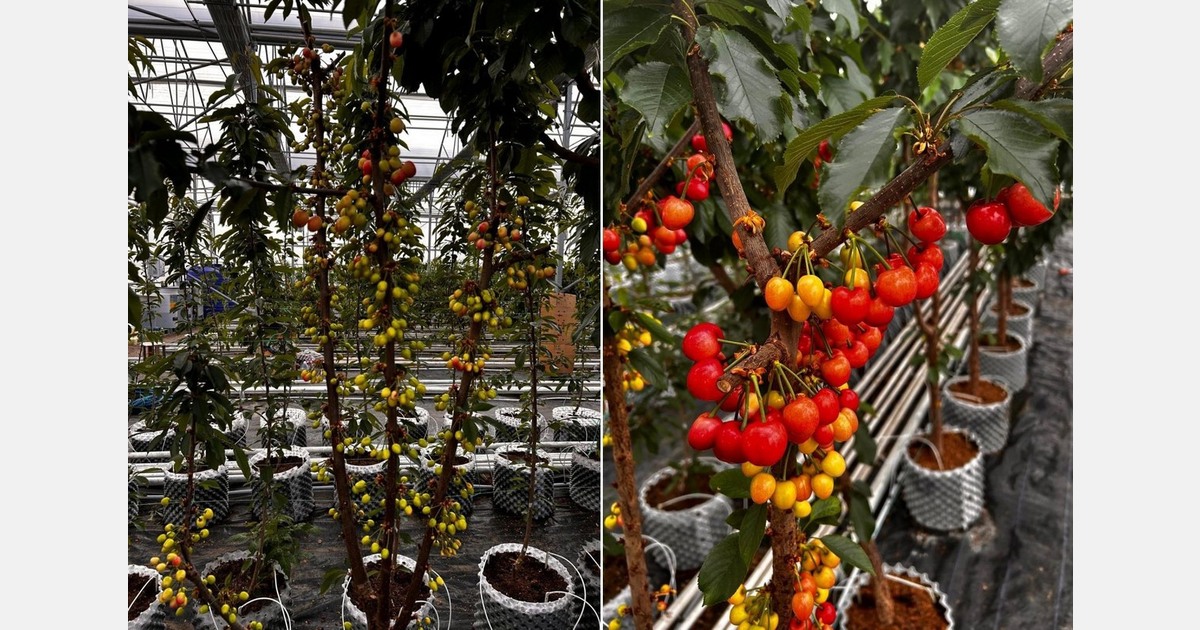
Source: HD.com
Hasan Burak Macit, Sales and Marketing Manager at Turkish propagator İrgeler, explains the rationale: "Although the region is situated at an altitude of 900 metres and is one of Turkey's colder areas, we chose it because the amount of sunshine is virtually the same as in Turkey's southern regions, and it has an alternative energy source (geothermal water)." This combination of high solar radiation and geothermal energy creates a viable environment for greenhouse cultivation, balancing natural light with controllable heating inputs. Rootstock–variety compatibility trials The project remains in a developmental stage, with a strong emphasis on testing genetic combinations under greenhouse conditions.
Generally, however, 90% of all combinations show compatibility, and the yield is at the required level." These findings highlight the importance of compatibility screening in controlled environments, where deviations from field conditions may influence graft performance and productivity. "Our aim for the next phase of our project is to bring the harvest forward by 10–15 days and to achieve two harvests per year," he reveals.
Why this matters: This matters when it gives operators a clearer way to manage water, nutrients, and root-zone risk. That kind of control usually improves both resource efficiency and crop consistency.
Frequently Asked Questions
What should growers evaluate before changing a lighting strategy?
They should look at crop type, canopy structure, current light distribution, energy cost, expected yield gain, and whether the new strategy improves whole-canopy efficiency.
Why is light distribution often as important as light quantity?
Because adding more photons to already saturated leaves does less work than improving how light reaches the parts of the canopy that are still underperforming.


