Top Critical Mistakes in Safety Instrumented System Design as per ISA 84 Standard and How to Avoid Them
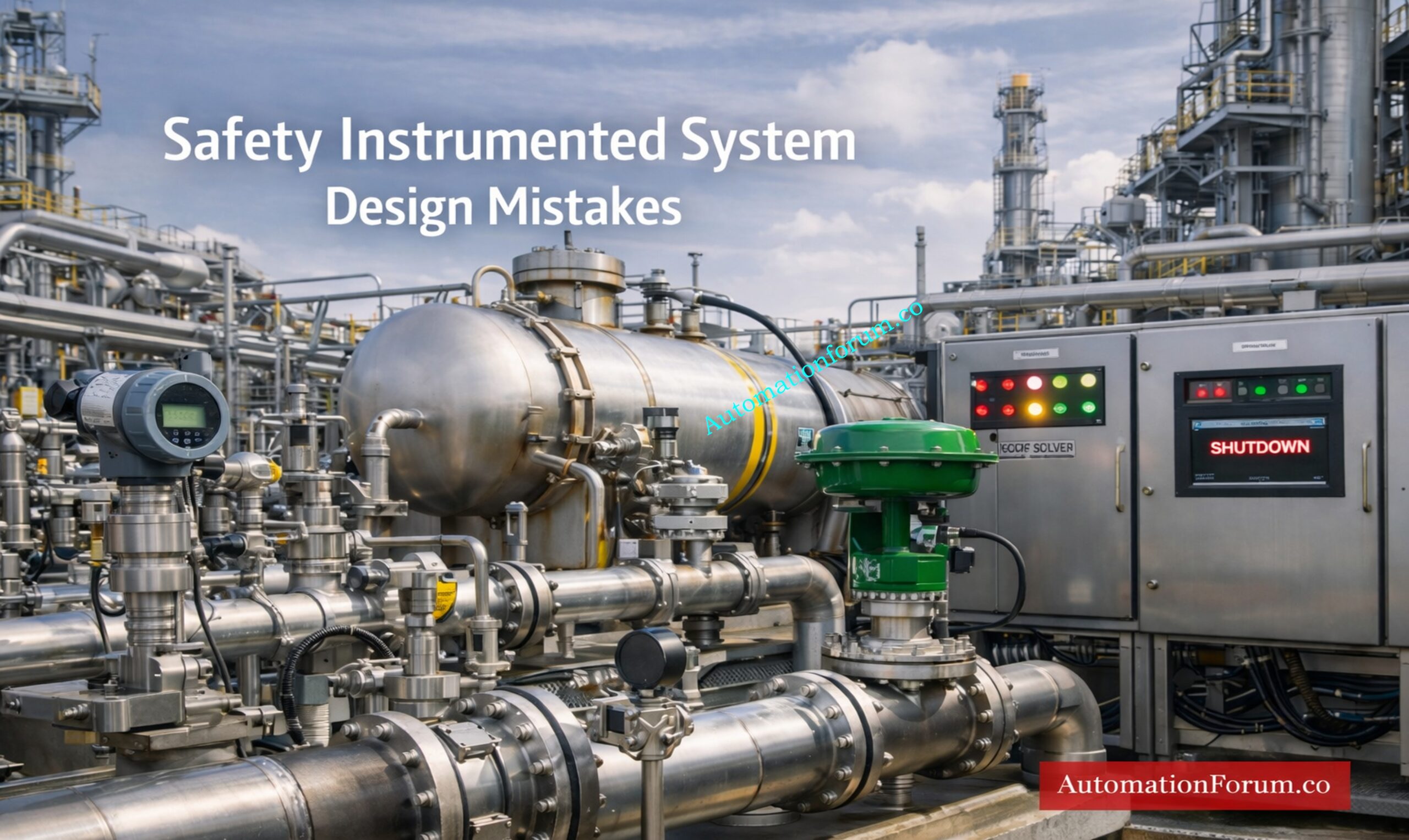
Source: Instrumentation and Control Engineering
Their main purpose is to detect hazardous process conditions and drive the plant to a safe state before a serious incident occurs. Even a well-funded project can fail if the SIS is designed poorly, tested inadequately, or maintained without discipline.
Safety Instrumented System design mistakes often happen during early engineering, especially when the team treats functional safety as a documentation task instead of a lifecycle activity. Standards such as ISA 84 standard guidelines and IEC 61511 SIS design provide a structured framework to reduce risk, improve traceability, and support safe operation.
Most of the time, the main problem isn’t that there aren’t any standards. It’s that they aren’t being followed well, that different fields aren’t working together well, and that designers and builders are taking shortcuts.
Why this matters: For operators, the real question is whether the sensing, control, or data layer creates faster and better decisions. The facilities that win are the ones that turn visibility into tighter control and tighter control into better outcomes.
Frequently Asked Questions
What is the difference between forward-acting and reverse-acting control valves?
Forward-acting and reverse-acting valves respond differently to a change in signal or process condition. The right choice depends on fail-safe behavior, process stability, and how the valve should respond under fault conditions, according to the source article.
Why does control valve action matter in greenhouse or facility design?
Valve action affects stability, safety, and controllability. In any engineered environment, choosing the wrong action can make a system harder to tune and more expensive to operate over time.