Using water more efficiently to enhance strawberry crops

Source: HD.com
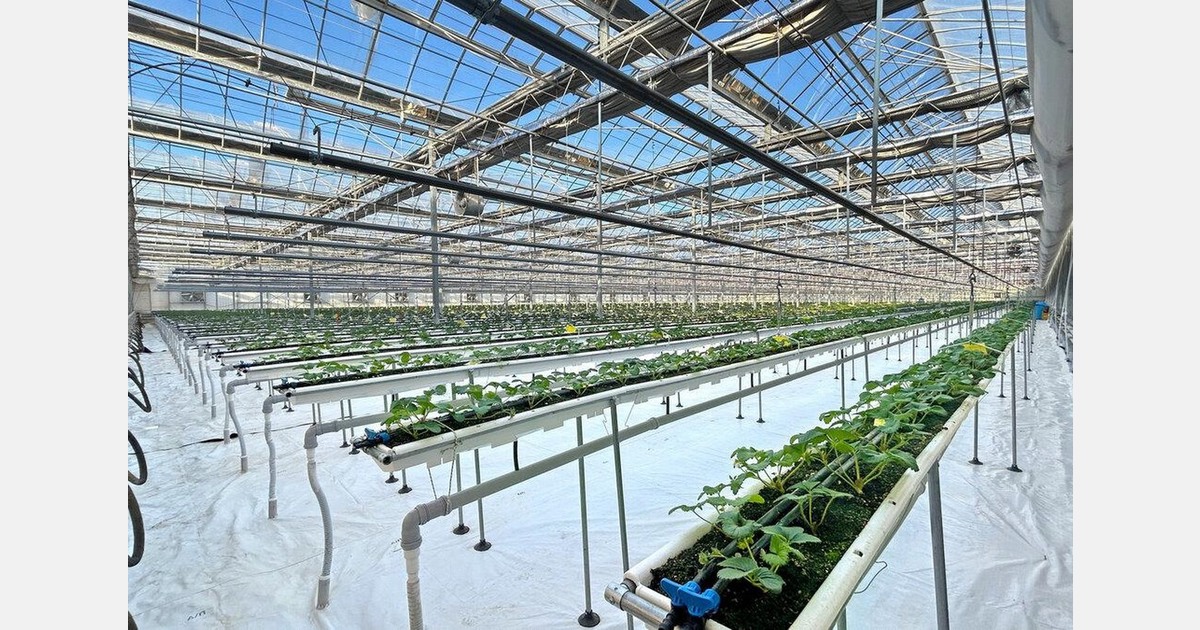
As we provide the news for free, we are relying on revenues from our banners. Using water more efficiently to enhance strawberry crops This study aimed to develop an automated irrigation system for substrate-grown strawberry plants and to evaluate whether irrigation and biostimulation levels influence yield and fruit quality.
The system comprised two Arduino Pro Mini devices equipped with LoRa transceivers, substrate moisture sensors, and servomotors for valve control. Six biostimulants were assessed [control (without biostimulation), microalga Spirulina platensis (SP), mycorrhiza Scutellospora heterogama (SH), a mycorrhizal community (SJ CS), SP + SH, and SP + SJ CS] under four irrigation levels [reference tension of 5 kPa (moderate water deficit), 10% above the reference tension (severe water deficit), 10% below the reference tension (mild water deficit), and standard irrigation without restriction] defined by substrate water tension.
Data were collected in real time and analyzed using the InfluxDB (version 3 Core) and Grafana (version 12.3.2) platforms. The automated system-controlled valve activation was based on moisture sensor readings, enabling the establishment of irrigation levels supported by energy-efficient technologies.
Why this matters: For operators, the real question is whether the sensing, control, or data layer creates faster and better decisions. The facilities that win are the ones that turn visibility into tighter control and tighter control into better outcomes.
Frequently Asked Questions
What is the difference between forward-acting and reverse-acting control valves?
Forward-acting and reverse-acting valves respond differently to a change in signal or process condition. The right choice depends on fail-safe behavior, process stability, and how the valve should respond under fault conditions, according to the source article.
Why does control valve action matter in greenhouse or facility design?
Valve action affects stability, safety, and controllability. In any engineered environment, choosing the wrong action can make a system harder to tune and more expensive to operate over time.