
Using water more efficiently to enhance strawberry crops
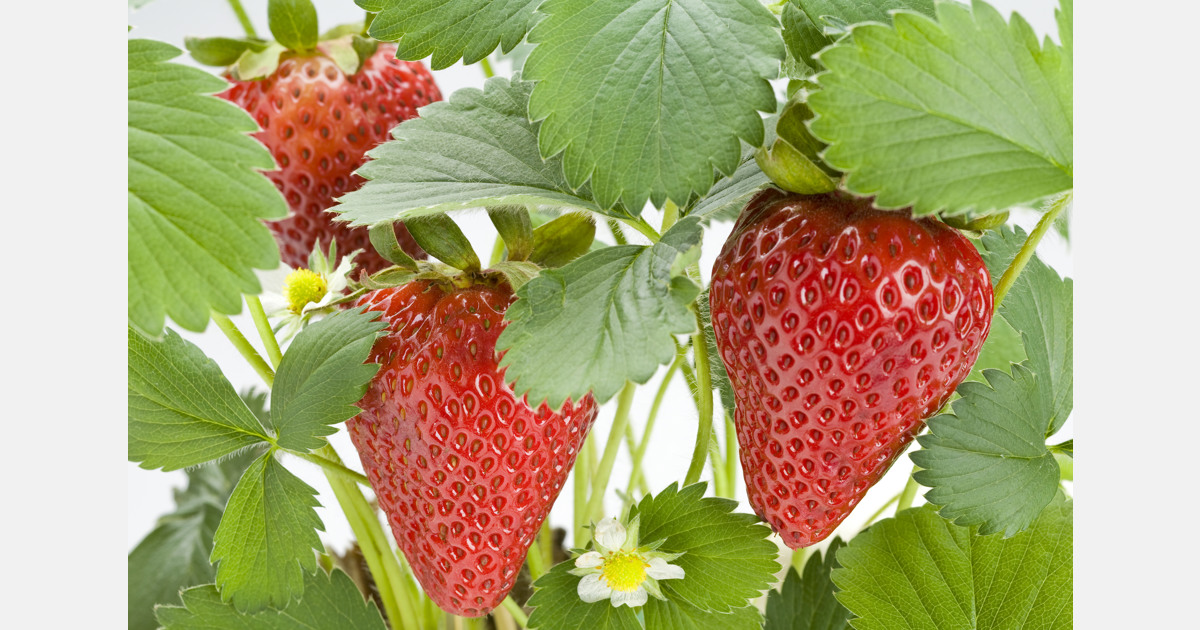
Source: HD.com
Using water more efficiently to enhance strawberry crops This study aimed to develop an automated irrigation system for substrate-grown strawberry plants and to evaluate whether irrigation and biostimulation levels influence yield and fruit quality. Six biostimulants were assessed [control (without biostimulation), microalga Spirulina platensis (SP), mycorrhiza Scutellospora heterogama (SH), a mycorrhizal community (SJ CS), SP + SH, and SP + SJ CS] under four irrigation levels [reference tension of 5 kPa (moderate water deficit), 10% above the reference tension (severe water deficit), 10% below the reference tension (mild water deficit), and standard irrigation without restriction] defined by substrate water tension.
The automated system-controlled valve activation was based on moisture sensor readings, enabling the establishment of irrigation levels supported by energy-efficient technologies. Overall, the findings support the use of automated irrigation and biostimulation as sustainable management strategies to enhance water use efficiency, productivity, and fruit quality in soilless strawberry cultivation.
Why this matters: This matters when it gives operators a clearer way to manage water, nutrients, and root-zone risk. That kind of control usually improves both resource efficiency and crop consistency.
Frequently Asked Questions
What should growers evaluate before changing a lighting strategy?
They should look at crop type, canopy structure, current light distribution, energy cost, expected yield gain, and whether the new strategy improves whole-canopy efficiency.
Why is light distribution often as important as light quantity?
Because adding more photons to already saturated leaves does less work than improving how light reaches the parts of the canopy that are still underperforming.


