
What is the potential of controlled environment strawberry production within the South central United States?
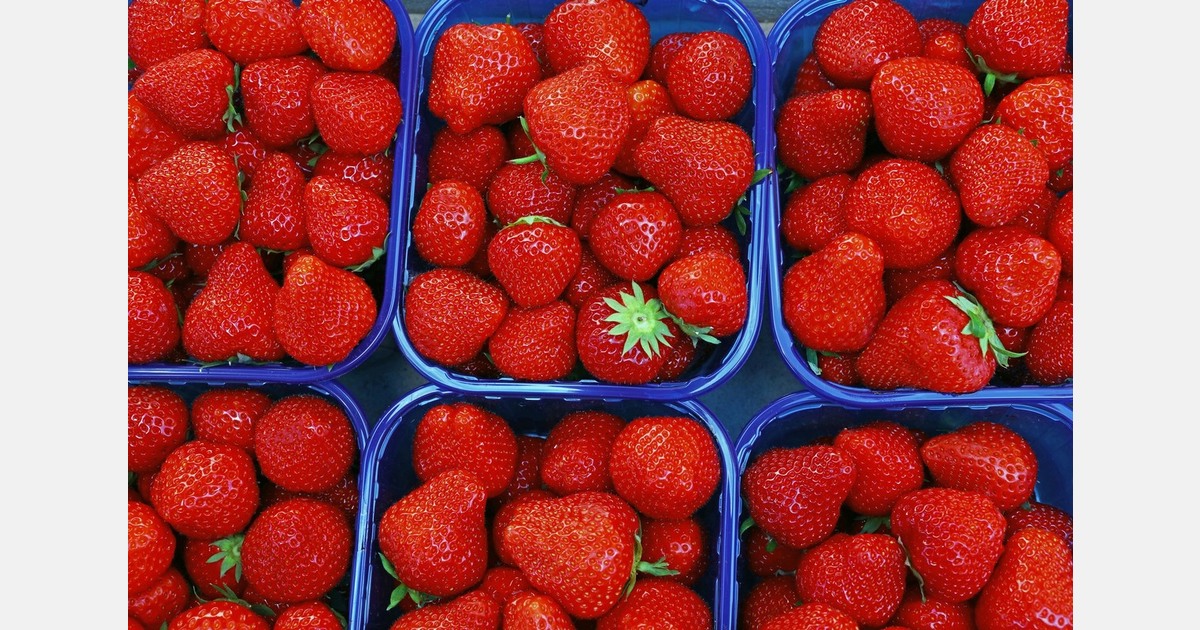
Source: VFD.com
An interdisciplinary group of researchers in the south central United States is visiting existing strawberry growing operations to evaluate a pathway to greater production quantity and quality using controlled environment growing methods © Mississippi State University Strawberries rank among the most popular fresh fruits within the US, and consumers expect fresh strawberries year-round. High tunnels (Figure 1) may extend growing seasons, increase early yields, and advance harvest dates which improve market timing and fruit quality in the South Central U.S.
Lighting, climate control, and yield prediction remain central production challenges, while high electricity costs for lighting and cooling limit expansion of fully indoor systems. Computer vision has provided autonomous solutions for agricultural applications, including pest and disease detection, automatic quality control of harvested fruits, and the detection, localization, and counting of flowers and crops for yield prediction, supported by openly available datasets.
Why this matters: This matters when it gives operators a clearer way to manage water, nutrients, and root-zone risk. That kind of control usually improves both resource efficiency and crop consistency.
Frequently Asked Questions
What should growers evaluate before changing a lighting strategy?
They should look at crop type, canopy structure, current light distribution, energy cost, expected yield gain, and whether the new strategy improves whole-canopy efficiency.
Why is light distribution often as important as light quantity?
Because adding more photons to already saturated leaves does less work than improving how light reaches the parts of the canopy that are still underperforming.


