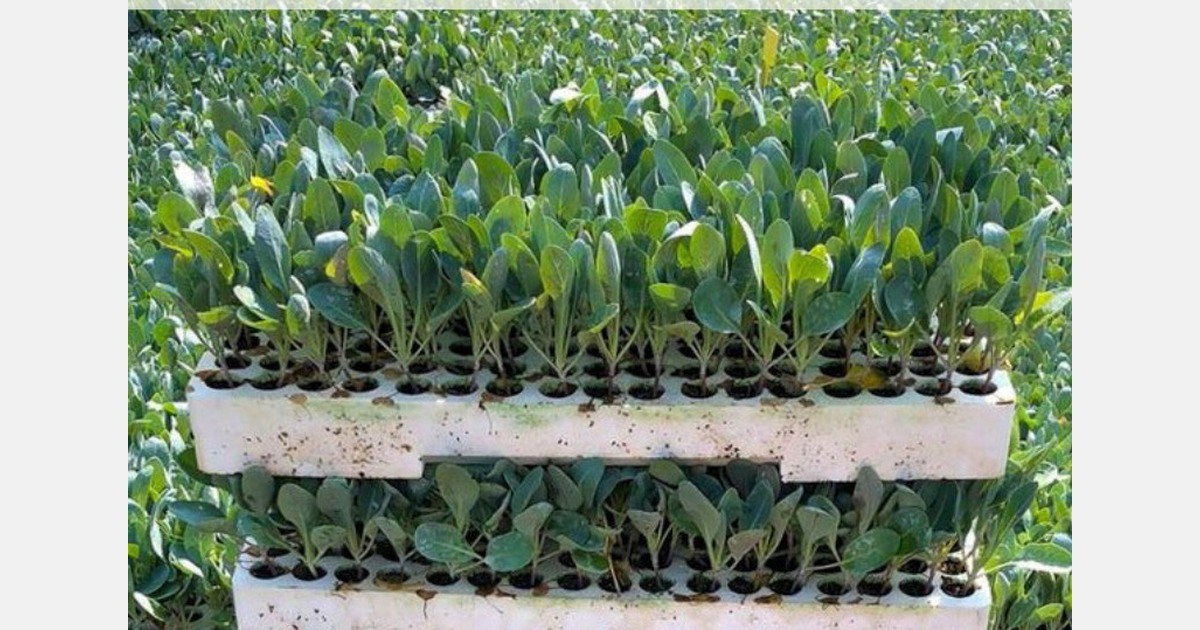
How to control seedling stretching in the greenhouse
Source: HD.com
As we provide the news for free, we are relying on revenues from our banners. Elongated seedlings tend to develop thin, weaker stems and show greater sensitivity to environmental and mechanical stress, making their management a priority for growers aiming for consistent results.
To address this issue, targeted agronomic practices are essential. Effective light management, such as the use of blue filters or materials that enhance the red to far-red ratio, helps promote more balanced plant development.
Adjusting planting density also plays a key role, as overcrowding leads to competition for light and encourages excessive elongation. By reducing the number of seedlings per square meter or adopting staggered layouts, growers can better control plant structure.
Why this matters: For operators, the real question is whether the sensing, control, or data layer creates faster and better decisions. The facilities that win are the ones that turn visibility into tighter control and tighter control into better outcomes.
Frequently Asked Questions
Why does LED fixture selection matter in controlled environment agriculture?
Lighting decisions affect both crop performance and energy intensity. Fixture efficiency, spectral control, and placement all influence how much value a facility gets from every kilowatt-hour.
What should growers evaluate before adopting new LED systems?
Growers should look at fixture efficiency, controllability, crop-specific use case, integration with existing controls, and the operational payback period instead of treating lighting as a standalone hardware purchase.