"Steaming kills pathogens and weeds but does not alter the particle size or structure"
Source: VFD.com
As we provide the news for free, we are relying on revenues from our banners. The demonstration aimed to prepare substrate for five different growers and test the process on a production scale.
The operation brought together Hans Kristian Westrum of Soil Steam, Ruud Elst of Elmi, and Peter Melis of Proefcentrum Hoogstraten. Hans Kristian Westrum, SoilSteam, explained the focus of the activity: "We ran tests last year to see how steamed substrate performs across different cultivation types and scales.
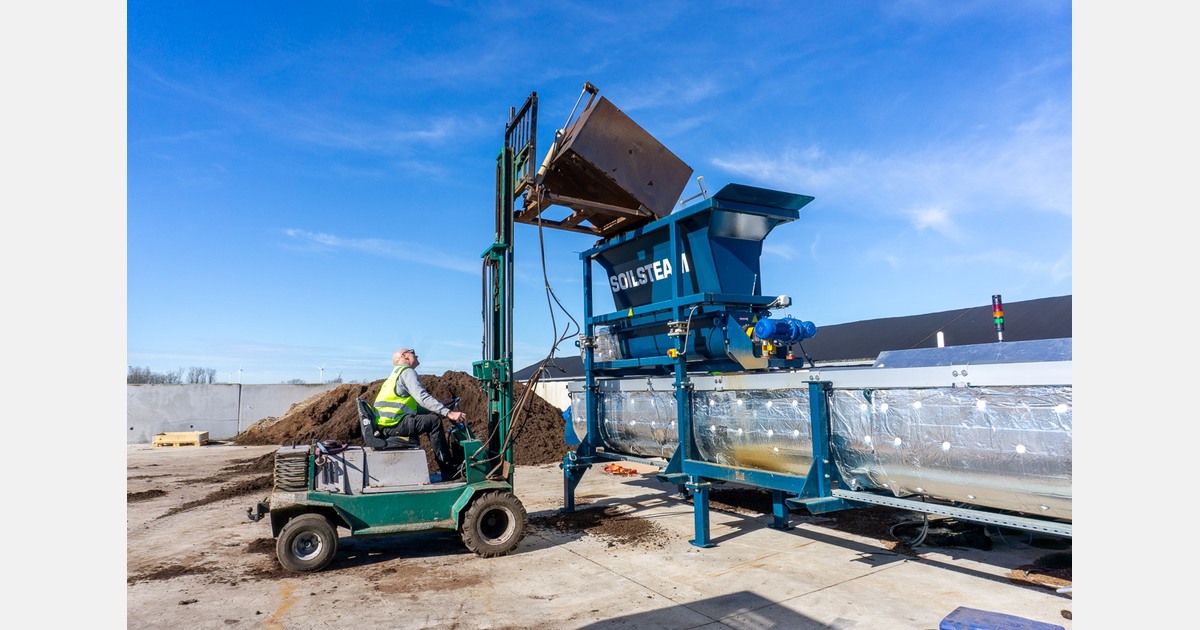
Thanks to the result and the trust these growers have in the procedure, we can now observe practical outcomes directly in growers' operations, not just in a research setting." © Arlette Sijmonsma | VerticalFarmDaily.com The process on location The steaming took place using a mobile installation equipped with a screw conveyor system, which ensures that every particle of the substrate passes through the steam chamber. The substrate itself consisted of a standard horticultural mix: peat, coconut coir, and perlite.
Why this matters: For operators, the real question is whether the sensing, control, or data layer creates faster and better decisions. The facilities that win are the ones that turn visibility into tighter control and tighter control into better outcomes.
Frequently Asked Questions
Why does LED fixture selection matter in controlled environment agriculture?
Lighting decisions affect both crop performance and energy intensity. Fixture efficiency, spectral control, and placement all influence how much value a facility gets from every kilowatt-hour.
What should growers evaluate before adopting new LED systems?
Growers should look at fixture efficiency, controllability, crop-specific use case, integration with existing controls, and the operational payback period instead of treating lighting as a standalone hardware purchase.